
Listen to this podcast for free in the app: Download for free in the App Store
radio.net
Sleep timer
Save favourites
100 episodes
What is a digital brain twin?
2026/07/08 | 13 mins.Each of us is different. Our genetics and life experiences shape us into unique individuals – with unique brains. When it comes to medicine, therefore, a 'one size fits all' approach is often not adequate, and trial and error is required to find the best treatment for a condition: especially when it comes to the brain. But what if a doctor could rely on personalised recommendations about what course of action may be best for a specific patient? We chat to computational neuroscientist Dr Andrea Luppi from Oxford's Department of Psychiatry about 'digital brain twins', and how - when it comes to brain conditions - they could help to achieve just that.How can we use AI to make drugs?
2026/06/17 | 12 mins.Put simply, most drugs work by binding to a protein and altering how they function. But how can we model how well a particular molecule will bind to a particular protein, and use that knowledge to help discover new treatments? In this episode, we talk to Prof Fergus Imrie from Oxford's Department of Statistics, who is one of the lead researchers on the OpenBind consortium. This project aims to create the world's largest open-access dataset of protein-ligand interactions, providing invaluable quantities of data for AI-driven drug discoveryHow do you build the aeroplane of the future?
2026/06/03 | 11 mins.In 2022, 7% of the UK's total carbon emissions came from the aviation sector - a figure that's on the rise. This means that - while a flight is often the start of a well-deserved holiday - a lot of us feel at least a sprinkling of guilt over our carbon footprint. So, what if we could reduce the carbon emissions associated with air travel? In this episode, we chat to Dr Tamsin Whitfield from Oxford's Department of Materials Science, and hear about her research developing new metals, which will ultimately allow jet engines to burn hotter, increasing their efficiency.Should I be freaked out by the hantavirus?
2026/05/20 | 13 mins.Until recently, most of us had probably never even heard of the hantavirus. Now - with memories of the global COVID-19 pandemic still fresh in our minds - it's only natural to feel slightly concerned about the new virus hitting our headlines. But are our worries justified? We chat to Dr Daniel Wright from the Oxford Vaccine Group, who develops vaccines against emerging outbreak viruses, to learn more about hantaviruses, and what they really mean for public health.Should we kill animals for conservation?
2026/05/06 | 12 mins.'Killing animals' and 'conservation' sound mutually exclusive, but when it comes to managing populations that are having a negative environmental impact, is culling the answer? If so, how do people feel about it? We chat to Jessica Frater from the Department of Biology at the University of Oxford about Scotland's deer cull, exploring why human perceptions are often at the heart of conservation challenges, and how gaining deeper insight to these perspectives can support more conservation efforts.
More Natural Sciences podcasts




Trending Natural Sciences podcasts
About Oxford Sparks Big Questions
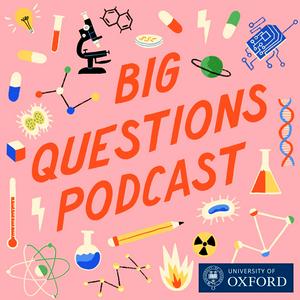
'Will my bacon sandwich kill me?', 'Is vaping better than smoking?', 'How do you become an astronaut?' - just some of the Big Questions we ask some of the brightest minds behind Oxford science. Join us in each podcast as we explore a different area of science.
Podcast websiteListen to Oxford Sparks Big Questions, Daniel and Kelly’s Extraordinary Universe and many other podcasts from around the world with the radio.net app
Get the free radio.net app
- Stations and podcasts to bookmark
- Stream via Wi-Fi or Bluetooth
- Supports Carplay & Android Auto
- Many other app features
Get the free radio.net app
- Stations and podcasts to bookmark
- Stream via Wi-Fi or Bluetooth
- Supports Carplay & Android Auto
- Many other app features

Oxford Sparks Big Questions
Scan code,
download the app,
start listening.
download the app,
start listening.
 South Africa
