
Listen to this podcast for free in the app: Download for free in the App Store
radio.net
Sleep timer
Save favourites
197 episodes
Simple Swing Trading Strategy for Beginners: Daily & 4-Hour Setup
2026/10/30 | 10 mins.Want to trade forex without spending all day watching charts? In this episode of Let's Talk Forex, Alison explains a simple swing trading strategy for beginners that combines Daily and 4-hour charts to identify trends, find potential entries and manage risk.
Using just the 20 EMA, 50 EMA and basic market structure, she also walks through a four-step process: Trend → Pullback → Confirmation → Risk.
In this episode, you'll learn:
How to identify a clear trend on the Daily chart
Why waiting for pullbacks can be better than chasing price
How to use the 4-hour chart to confirm potential entries
Where to place stop losses and how to calculate position size
When to skip a trade because conditions aren't right
Why currency correlation matters when managing multiple positions
How to backtest your strategy before trading with real money
The goal isn't to find a trade every day. It's to develop a repeatable process, wait for the right conditions and manage your risk consistently.
Whether you're new to forex trading or looking for a more structured approach to swing trading, this episode offers a practical framework you can test and adapt to your own trading.
Useful Links & Resources
Watch this episode on YouTube: https://youtu.be/IuTmjxwXuLg
Visit Pepperstone: https://bit.ly/pepperstone_2026
Watch our guide to forex risk management: https://youtu.be/E1xvBnEg-eM
FxScouts Free Trading Journal: https://journal.fxscouts.com/
Independent Forex Broker Reviews: https://fxscouts.com/
Follow FxScouts
Instagram: https://www.instagram.com/fxscouts/
TikTok: https://www.tiktok.com/@fxscouts
LinkedIn: https://www.linkedin.com/company/fxscouts/
Facebook: https://t.ly/CAjgH
Risk Warning & Disclaimer
75–90% of retail traders lose money trading Forex and CFDs. Consider whether you understand how CFDs and leveraged trading work and whether you can afford the high risk of losing your money. This podcast is for educational and informational purposes only and does not provide trading signals, personalised investment recommendations or financial advice. Past performance is not indicative of future results.AI for Forex Trading: 5 Prompts Every Trader Should Use
2026/10/23 | 14 mins.Can AI make you a better forex trader without predicting market movements?
In this episode of Let’s Talk Forex, Alison and Chris explore five practical ways to use AI tools like ChatGPT to improve your trading research, prepare for economic events, challenge your assumptions and learn from your trading history.
Rather than relying on AI-generated trade signals or price predictions, they explain how AI can support better-informed decisions and a more disciplined trading process.
In this episode, you'll learn:
How to use AI to find and summarise relevant forex market news
How to create a weekly economic calendar and prepare for major announcements
What makes an effective AI prompt for forex trading
How to analyse economic data and central bank decisions
How to challenge confirmation bias and test your trading assumptions
How to review your trading journal and identify recurring mistakes
Why reliable sources, accurate timestamps and fact-checking matter
The limitations and risks of using AI in forex trading
Alison and Chris also share five practical AI prompts covering daily market research, economic event planning, post-event analysis, bias checking and trading journal reviews. Each prompt is designed to help you get more useful information from AI without relying on it to tell you what to trade.
The key takeaway? AI can be a valuable trading assistant, but it cannot replace your judgement, predict the market or eliminate trading risk.
Listen to Let’s Talk Forex for practical trading education, strategy discussions and insights to help you develop a more structured approach to forex trading.
Resources
Watch this Episode on YouTube: https://youtu.be/sdeA52fxTxE
FxScouts Trading Journal: https://journal.fxscouts.com/
Forex Broker Reviews: https://fxscouts.com/forex-brokers/
Risk Warning & Disclaimer
75–90% of retail traders lose money trading Forex and CFDs. Consider whether you understand how leveraged trading works and can afford the high risk of losing your money. This podcast is for educational and informational purposes only and does not constitute trading signals or financial, investment, legal or tax advice. Past trading performance does not guarantee future results.Does Your Forex Strategy Actually Work? Backtesting & Forward Testing
2026/10/16 | 14 mins.A few winning trades or a high win rate don't necessarily mean your forex trading strategy is profitable. So how can you tell whether your strategy has a genuine edge before risking real money?
In this episode of Let's Talk Forex, Alison and Chris discuss how to properly test a trading strategy, measure its performance and decide when it might be ready for live trading.
They explore the differences between backtesting and forward testing, why win rate alone can be misleading, and how factors such as expectancy, drawdown, trading costs and market conditions affect long-term results.
You'll also learn why a strategy with a 40% win rate can still be profitable before costs, why losing streaks are a normal part of trading, and how to distinguish a flawed strategy from poor execution.
Watch the episode on YouTube here: https://youtu.be/ClYumYPQ8NQ
In this episode:
Backtesting strategies without hindsight bias
Understanding sample sizes and statistical reliability
Measuring expectancy, drawdown and risk-to-reward
Testing strategies across different market conditions
Moving from backtesting to demo and live trading
Accounting for spreads, commissions and slippage
Recognising execution mistakes versus strategy failure
Knowing when to stop trading and reassess your approach
Related episodes:
Forex Win Rate vs Risk Reward | What Actually Makes a Strategy Profitable?
Why Your Forex Trading Strategy Isn't Working (It Might Be You)
Resources:
FxScouts Trading Journal: https://journal.fxscouts.com/
Independent Forex Broker Reviews: https://fxscouts.com/
Follow FxScouts:
Instagram: https://www.instagram.com/fxscouts/
TikTok: https://www.tiktok.com/@fxscouts
LinkedIn: https://www.linkedin.com/company/fxscouts/
Facebook: https://t.ly/CAjgH
Risk Warning & Disclaimer:
Trading Forex and CFDs involves a high risk of losing money. Approximately 75–90% of retail traders lose money trading Forex and CFDs. Consider whether you understand leveraged trading and can afford the risk. This podcast is for educational and informational purposes only and does not constitute investment advice, trading signals or personal financial recommendations. Past performance is not a reliable indicator of future results.When NOT to Trade Forex | 5 Rules Every Trader Needs
2026/10/09 | 15 mins.Knowing when not to trade Forex can be just as important as knowing when to enter. In this episode of Let’s Talk Forex, we break down five situations where stepping aside may be the better decision: poor market conditions, major news events, an incomplete setup, an unstable trading mindset, and reaching your daily loss limit.
We explain how to recognise choppy and ranging markets, why higher spreads and major economic releases can make execution less predictable, and how to determine whether a setup actually meets the rules in your trading plan. We also look at the warning signs of emotional trading, including revenge trading, overconfidence and the pressure to recover losses.
Finally, we run through a practical five-question pre-trade checklist covering market conditions, news, setup quality, mindset and daily risk limits, and explain how a trading journal can help you track both the trades you take and the trades you correctly decide to skip.
Watch this episode on YouTube here: https://youtu.be/l5Mn6uQIFFY
Try our Trading Journal here: https://journal.fxscouts.com
FxScouts Disclaimer
Forex and CFD trading involves significant risk, and you may lose money rapidly due to leverage. Make sure you understand how these products work and whether you can afford the risk of loss.
The information in Let's Talk Forex is for educational and informational purposes only and does not constitute investment, financial, legal, or tax advice. Past performance is not a reliable indicator of future results.Forex Win Rate vs Risk Reward | What Actually Makes a Strategy Profitable?
2026/10/02 | 10 mins.Does a high Forex win rate mean you have a profitable trading strategy? Not necessarily. In this episode of Let’s Talk Forex, we explain how win rate, risk-to-reward and trading expectancy work together, and why looking at any one of these numbers in isolation can give you the wrong picture.
We compare an 80% win-rate strategy with a 40% win-rate strategy to show how the size of your average winners and losers can matter just as much as how often you win. We then break down risk-to-reward ratios, why simply targeting 1:3 or 1:5 doesn't automatically improve a strategy, and how positive expectancy helps measure what your trading results look like over a larger sample.
We also look at the difference between your planned risk-to-reward and the results you actually achieve, including how closing winners early or allowing losses to run can completely change the numbers behind your strategy.
Finally, we explain which statistics are worth tracking in a trading journal: win rate, average winner, average loser, risk-to-reward and expectancy, and why a losing trade doesn't necessarily mean you made a bad trading decision.
Watch the episode on YouTube here: https://youtu.be/3TM7QEfpPS8
Try our Trading Journal here: https://journal.fxscouts.com
FxScouts Disclaimer
Forex and CFD trading involves significant risk, and you may lose money rapidly due to leverage. Make sure you understand how these products work and whether you can afford the risk of loss.
The information in Let's Talk Forex is for educational and informational purposes only and does not constitute investment, financial, legal, or tax advice. Past performance is not a reliable indicator of future results.
More Business podcasts








Trending Business podcasts




















About Let’s Talk Forex with Alison and Chris
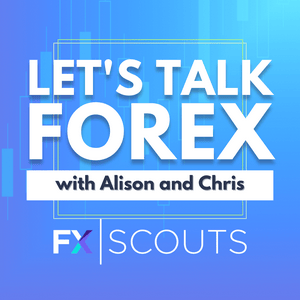
Let’s Talk Forex is a podcast by FxScouts, created to help beginner and developing traders build a strong foundation in the Forex market.
Hosted by Alison and Chris, the show draws on years of experience reviewing brokers and analysing global markets. We cut through the noise to deliver clear, practical insights that help you start trading with confidence and avoid common mistakes.
Each episode covers the questions that matter most — from choosing a trustworthy broker and understanding regulation, to managing risk, improving trading psychology, and refining your strategy.
Whether you are placing your first trade or looking to sharpen your edge, Let’s Talk Forex helps you make smarter, more informed trading decisions
DISCLAIMER75-90% of retail traders lose money trading Forex and CFDs. You should consider whether you understand how CFDs and leveraged trading work and if you can afford the high risk of losing your money. Any information discussed here is solely for educational and informational purposes and should not be considered tax, legal or investment advice.
Podcast websiteListen to Let’s Talk Forex with Alison and Chris, A Bit of Optimism and many other podcasts from around the world with the radio.net app
Get the free radio.net app
- Stations and podcasts to bookmark
- Stream via Wi-Fi or Bluetooth
- Supports Carplay & Android Auto
- Many other app features
Get the free radio.net app
- Stations and podcasts to bookmark
- Stream via Wi-Fi or Bluetooth
- Supports Carplay & Android Auto
- Many other app features

Let’s Talk Forex with Alison and Chris
Scan code,
download the app,
start listening.
download the app,
start listening.
 South Africa

