
Listen to this podcast for free in the app: Download for free in the App Store
radio.net
Sleep timer
Save favourites
195 episodes
The Earth Transformed | The Eye of the Storm | 4
2026/10/27 | 33 mins.What did a run of terrible Caribbean hurricanes have to do with American independence?
How did a volcano in Indonesia help give us Frankenstein?
And, why were so many of the people fighting for civil rights also fighting for the planet?
In the next part of The Earth Transformed, Peter Frankopan and Afua Hirsch follow the storms, eruptions and campaigners that changed the course of history.
Why Europeans didn't just build their plantations in West Africa, and how mosquitoes helped draw the line between America's North and South. Hurricane-wrecked islands desperate for food, rope and wood, and American merchants furious that London decided who they could sell to. Then the year without a summer: Mary Shelley's rain-soaked holiday at Lake Geneva, soldiers home from the Napoleonic Wars with no work, and the massacre at Peterloo. Plus a jumbo jet that flew into volcanic ash, Frankenstein at Cold War disarmament talks, and why Coretta Scott King, Rachel Carson and Greta Thunberg belong in the same story.
Join Legacy Plus for bonus episodes, early access, Q&A's, fewer adverts and more.
legacy.supportingcast.fm
[0:00] Hurricanes, volcanoes and the women who fought for the planet
[1:49] Founding mothers, and history without the weather
[3:34] Why not build plantations in West Africa?
[9:29] The hurricanes behind American independence
[13:07] Frankenstein and a gothic childhood
[14:22] Mount Tambora and the year without a summer
[18:02] A jumbo jet, an ash cloud and nuclear winter
[23:38] Civil rights and the climate
[26:55] Rachel Carson and Silent Spring
[27:57] Why women led the fight
Stay connected with Legacy:
Instagram: @originallegacypodcast
TikTok: @legacy_productions
Explore more from Peter and Afua — essays, sources, and ideas:
Substack: peterfrankopan.substack.com | afuahirsch.substack.com
Join Legacy+ for bonus episodes, early access, Q&A's, fewer adverts and more.
legacy.supportingcast.fm
Stay connected with Legacy:
Instagram: @originallegacypodcast
TikTok: @legacy_productions
Explore more from Peter and Afua — essays, sources, and ideas: Substack: peterfrankopan.substack.com | afuahirsch.substack.com
Hosted on Acast. See acast.com/privacy for more information.Inbox: Barbara Cartland, The Great Dictator | Matthew Sweet
2026/10/22 | 43 mins.How did a woman lying on a sofa with a Pekingese on her lap write 723 books?
Why did the queen of pink chiffon put shoe polish on her eyelashes?
And, if she sold around 750 million copies, why can't you find her books in a shop today?
Matthew Sweet, author of the first biography to take Barbara Cartland seriously, tells Peter Frankopan and Afua Hirsch how a Doctor Who audio play about alien bookworms led him to her private papers.
A house left almost untouched since she died in 2000. A father killed in the Great War, two brothers lost at Dunkirk, and two suitors who threatened to shoot themselves if she said no. Then the paradox: a woman who told readers to put their husbands first while working six days a week, a Tory councillor who fought for travellers' rights, and the author of sex advice manuals. Plus Private Eye's cruellest cartoons, bought and hung in her downstairs loo, the Nigerian romance writers who name her as their inspiration, and why Matthew will never sit on her sofa.
Join Legacy Plus for bonus episodes, early access, Q&A's, fewer adverts and more.
legacy.supportingcast.fm
[0:00] 723 books, a Pekingese and shoe polish on her lashes
[4:14] Alien bookworms: the strangest way into a biography
[7:00] Why "The Great Dictator": a lost fortune and a family rebuilt by work
[9:41] Writing from the couch: war, grief and the women left behind
[17:37] The Tory councillor who fought for travellers' rights
[21:21] Nigerian romance writers, and her plan to conquer the world
[25:12] War paint: the lashes, the hair and the dog
[28:33] Private Eye cartoons in the downstairs loo
[31:00] Motherhood, and a family where everyone had to confess
[37:53] Third best-selling author ever, so why has she vanished?
Stay connected with Legacy:
Instagram: @originallegacypodcast
TikTok: @legacy_productions
Explore more from Peter and Afua — essays, sources, and ideas:
Substack: peterfrankopan.substack.com | afuahirsch.substack.com
Join Legacy+ for bonus episodes, early access, Q&A's, fewer adverts and more.
legacy.supportingcast.fm
Stay connected with Legacy:
Instagram: @originallegacypodcast
TikTok: @legacy_productions
Explore more from Peter and Afua — essays, sources, and ideas: Substack: peterfrankopan.substack.com | afuahirsch.substack.com
Hosted on Acast. See acast.com/privacy for more information.The Earth Transformed | Africa and Us | 3
2026/10/20 | 37 mins.Why were the first cowboys in the Americas from West Africa?
What does it mean in Akan culture when a man "eats from another woman's pot"?
And, could a mosquito be the reason Ghana never became a settler colony like South Africa or Kenya?
In the next part of The Earth Transformed, Peter Frankopan and Afua Hirsch put Africa at the centre of the story, and find it at the centre of ours too.
West African villages with no walls and no kings, because there was enough for everyone. An ancient Ghana nowhere near modern Ghana, and Mansa Musa's gold. Then food: why a Ghanaian host will never let you leave hungry, the European visitors who resented Africa's abundance, a colleague in Senegal who thought the perfect birthday present was a goat, and the jollof wars. Plus the genetic resistance to malaria that shaped the slave trade, and how the mosquito kept European settlers out of West Africa and sent Afua's grandfather to Cambridge.
Join Legacy Plus for bonus episodes, early access, Q&A's, fewer adverts and more.
legacy.supportingcast.fm
[0:00] Land, food and race: three ways Africa shaped the world
[2:01] Is "Africa" even the right word?
[7:22] Villages with no walls and no kings
[11:01] Two Ghanas, and Mansa Musa's gold
[13:08] Why you'll never leave a Ghanaian home hungry
[17:04] The first cowboys in the Americas
[21:56] A goat for a birthday, and the jollof wars
[25:57] Malaria, genes and the slave trade
[29:50] How the mosquito kept settlers out of West Africa
[32:56] Africans telling their own stories
Stay connected with Legacy:
Instagram: @originallegacypodcast
TikTok: @legacy_productions
Explore more from Peter and Afua — essays, sources, and ideas:
Substack: peterfrankopan.substack.com | afuahirsch.substack.com
Join Legacy+ for bonus episodes, early access, Q&A's, fewer adverts and more.
legacy.supportingcast.fm
Stay connected with Legacy:
Instagram: @originallegacypodcast
TikTok: @legacy_productions
Explore more from Peter and Afua — essays, sources, and ideas: Substack: peterfrankopan.substack.com | afuahirsch.substack.com
Hosted on Acast. See acast.com/privacy for more information.Inbox: Six Men, Three Vans and a US Air Base | Iran, Putin and Oil
2026/10/15 | 22 mins.How do six men in three vans outside a Cotswolds air base end with America flying its bombers home?
What can 300,000 tonnes of Russian diesel actually do for American drivers?
And, are a quiet corner of England, an airport in Riyadh and the war in Ukraine all part of the same story?
In this Legacy Inbox episode, Peter Frankopan and Afua Hirsch try to work out how the week's biggest stories fit together.
A farmer who spotted men in balaclavas, a suspect who rang the police on himself, and Peter's three theories for what really happened at RAF Fairford. Then Houthi missiles hitting King Khalid Airport, the long war in Yemen the world stopped watching, and a diesel deal with Putin that covers roughly one American morning. Plus Trump's call for Ukraine to find a new leader, the Nobel Peace Prize he didn't win, and a rare moment when Afua changes Peter's mind about how Americans see Russia.
Join Legacy Plus for bonus episodes, early access, Q&A's, fewer adverts and more.
legacy.supportingcast.fm
[0:00] Iran, Saudi, Ukraine and the Cotswolds, all in one week
[1:05] Men in balaclavas outside RAF Fairford
[3:53] Three theories: diesel thieves, an Iranian plot, or a US exit plan
[9:20] Houthi missiles hit Riyadh, and the war in Yemen nobody watched
[12:06] Trump, Putin and a diesel deal worth one American morning
[14:36] The Nobel Peace Prize, and the court under threat
[16:38] Do Americans still see Russia as the bad guy?
[21:05] Is it all connected?
Stay connected with Legacy:
Instagram: @originallegacypodcast
TikTok: @legacy_productions
Explore more from Peter and Afua — essays, sources, and ideas:
Substack: peterfrankopan.substack.com | afuahirsch.substack.com
Join Legacy+ for bonus episodes, early access, Q&A's, fewer adverts and more.
legacy.supportingcast.fm
Stay connected with Legacy:
Instagram: @originallegacypodcast
TikTok: @legacy_productions
Explore more from Peter and Afua — essays, sources, and ideas: Substack: peterfrankopan.substack.com | afuahirsch.substack.com
Hosted on Acast. See acast.com/privacy for more information.The Earth Transformed | The World in Motion | 2
2026/10/13 | 41 mins.If almost every early migration out of Africa failed, how did any of us get here?
Why does an Akan word that once meant "person from beyond the cornfields" now mean a white person?
And, when British politicians talk about net migration, who are they leaving out?
Peter Frankopan takes Afua Hirsch through 50,000 years of people on the move, using the new illustrated edition of The Earth Transformed.
A green Sahara full of lakes. Romans who conquered half the world but didn't spread their genes. Huns and Mongols running empires like a business that had to grow every year. Then the long scars the slave trade left on trust in West Africa, and the Gold Coast students who came to Britain long before Windrush. Plus 150 million people on the move in a single century, and Afua's prediction for 2050. And a school where Wednesday homework was translating Sanskrit into Urdu, and why speaking five Ghanaian languages never earns the respect that French does.
Join Legacy Plus for bonus episodes, early access, Q&A's, fewer adverts and more.
legacy.supportingcast.fm
[0:00] 50,000 years of people on the move
[2:07] The surest way to lose an election, and Vikings who are fine in hindsight
[8:19] Almost every early migration out of Africa failed
[13:23] Skin colour, vitamin D and why race is a social construct
[16:47] Rome, the Huns and empire as a business model
[20:22] The Mongols in Hungary, and the Greek idea of the stranger
[24:23] "Beyond the cornfields": the scars you can still hear in a word
[28:11] The migration nobody counts: Britons leaving
[31:44] 2050: will Britain wish it had immigration?
[36:04] Languages, Sanskrit homework, and which ones count as "sophisticated"
Stay connected with Legacy:
Instagram: @originallegacypodcast
TikTok: @legacy_productions
Explore more from Peter and Afua — essays, sources, and ideas:
Substack: peterfrankopan.substack.com | afuahirsch.substack.com
Join Legacy+ for bonus episodes, early access, Q&A's, fewer adverts and more.
legacy.supportingcast.fm
Stay connected with Legacy:
Instagram: @originallegacypodcast
TikTok: @legacy_productions
Explore more from Peter and Afua — essays, sources, and ideas: Substack: peterfrankopan.substack.com | afuahirsch.substack.com
Hosted on Acast. See acast.com/privacy for more information.
More History podcasts
Trending History podcasts



About Legacy
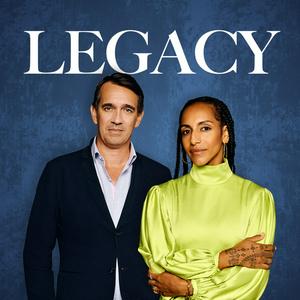
Afua Hirsch and Peter Frankopan tell the wild stories of some of the most extraordinary men and women ever to have lived – and ask whether they have the rep they deserve. Should Nina Simone’s role in the civil rights movement be more celebrated than it is? When you find out what Picasso got up to in his studio, can you still admire his art? Was Napoleon a hero or a tyrant - or both? (And, while we’re at it, was he even short?) Legacy is the show that looks at big lives from the perspective of now – and doesn’t always like what it sees. Hosted on Acast. See acast.com/privacy for more information.
Podcast websiteListen to Legacy, Empire: World History and many other podcasts from around the world with the radio.net app
Get the free radio.net app
- Stations and podcasts to bookmark
- Stream via Wi-Fi or Bluetooth
- Supports Carplay & Android Auto
- Many other app features
Get the free radio.net app
- Stations and podcasts to bookmark
- Stream via Wi-Fi or Bluetooth
- Supports Carplay & Android Auto
- Many other app features
Legacy
Scan code,
download the app,
start listening.
download the app,
start listening.
Legacy: Podcasts in Family
 South Africa