
Listen to this podcast for free in the app: Download for free in the App Store
radio.net
Sleep timer
Save favourites
239 episodes
What's for dinner in 2050?
2026/10/26 | 54 mins.For most of human history there was one problem with our food: there wasn’t enough of it. But the food system we built to solve that problem — the one capable of feeding eight billion people — is responsible for a third of greenhouse gas emissions. It’s also made poor diet the leading cause of early death globally — ahead of smoking. Producer Mitchell Stuart spent a year asking: what should we be eating instead?How the Humanities can pull down the screens between us
2026/10/23 | 54 mins.From the earliest days of cinema to our era of streaming, zooming, and scrolling, the screen has become a central part of our lives -- so central that it actually impedes our lives, erasing our bodies, and to hiding from one another. Kim Nelson, film professor and director of the Humanities Research Centre at the University of Windsor, argues in a public talk that remaining connected entails protecting and treasuring the enduring wisdom of the humanities -- literature, history, philosophy, art, and drama. This event was held at the University of Windsor and features an onstage interview between Kim Nelson and IDEAS host Nahlah Ayed.AI as the new Delphic Oracle?
2026/10/22 | 54 mins.For more than a thousand years the Oracle of Delphi sat on a stool at the ‘navel of the universe.’ Under a mystical trance, she would offer cryptic predictions of the future. People would wait months, even years, for their chance to ask the Oracle for guidance on matters ranging from reproductive challenges, to family tiffs to when and how to wage war.
While the ritual around her remains shrouded in mystery, her predictions were – strangely – always right. Today our urge to predict the future mirrors the same psychological need that drove leaders to the Oracle at Delphi -- discomfort with uncertainty and deep seeded desire to control the unpredictable.The 2,000-year-old travel list to complete before you die
2026/10/21 | 54 mins.More than 2,000 years ago, someone sat down and wrote a travel bucket list for the ancient world — suggesting must-see places that we now call The Seven Wonders of the World. It was kind of a Lonely Planet guide of its time, and included the Pyramid of Giza, the Hanging Gardens of Babylon, the lighthouse of Alexandria, and the Temple of Artemis, among others. Historian Bettany Hughes brings monuments and archaeological discoveries back to life in her book,"The Seven Wonders of the Ancient World." *This episode originally aired on Nov. 6, 2024.How a natural catastrophe 8,000 years ago may have fueled Brexit
2026/10/20 | 54 mins.For the first two billion years, the Earth didn't have oxygen. That's just one of the many fascinating details Peter Frankopan reveals in his book, "Earth Transformed: An Untold History." The Oxford professor of global history takes us on a multi-million year tour, illustrating the breathtaking ways climate has shaped the Earth and human civilization. How the collapse of a sediment shelf 8,000 years ago isolated what's now Britain from Europe, and its potential influence on the Brexit vote in 2016. Or how climate fluctuations correlate to periods of antisemitic violence. There's a lot to learn in this podcast. Have a listen. *This episode originally aired on Feb. 9, 2026.
More Society & Culture podcasts





Trending Society & Culture podcasts












About Ideas
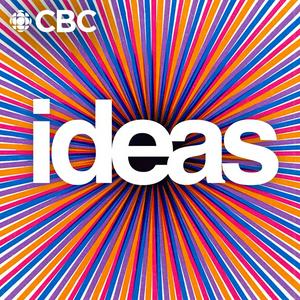
IDEAS is a place for people who like to think. If you value deep conversation and unexpected reveals, this show is for you. From the roots and rise of authoritarianism to near-death experiences to the history of toilets, no topic is off-limits. Hosted by Nahlah Ayed, we’re home to immersive documentaries and fascinating interviews with some of the most consequential thinkers of our time.With an award-winning team, our podcast has proud roots in its 60-year history with CBC Radio, exploring the IDEAS that make us who we are. New episodes drop Monday through Friday at 5pm ET.
Podcast websiteListen to Ideas, What Now? with Trevor Noah and many other podcasts from around the world with the radio.net app
Get the free radio.net app
- Stations and podcasts to bookmark
- Stream via Wi-Fi or Bluetooth
- Supports Carplay & Android Auto
- Many other app features
Get the free radio.net app
- Stations and podcasts to bookmark
- Stream via Wi-Fi or Bluetooth
- Supports Carplay & Android Auto
- Many other app features
Ideas
Scan code,
download the app,
start listening.
download the app,
start listening.
Ideas: Podcasts in Family
 South Africa