

Listen to this podcast for free in the app: Download for free in the App Store
radio.net
Sleep timer
Save favourites
1595 episodes
5 Things to Stop Saying to Your Kids
2026/09/13 | 16 mins.Some of the most well-intentioned things we say to our kids can backfire.
From “Good job, you’re so smart” to “You’ll be fine” and “Why can’t you be more like your sister?”, Justin and Kylie unpack five common phrases that can undermine confidence, shut down emotions and create distance between parents and kids.
More importantly, they share what to say instead to help kids feel understood, capable and connected.
KEY POINTS
Why too much praise can make kids depend on external validation
The hidden cost of saying “I’m disappointed in you”
Why “You’ll be fine” can leave a struggling child feeling alone
How comparing siblings can fuel conflict and self-doubt
Why saying “I was never good at maths either” can create a limiting mindset
Simple phrases that build connection without trying to fix everything
QUOTE OF THE EPISODE
“You need to know that we love you no matter what.”
RESOURCES MENTIONED
Raising an Emotionally Intelligent Child by John Gottman
Research by Wolf Meyer on praise and children’s perceptions of ability
Research by Eddie Brummelman on inflated praise
Research by Avi Assor and Guy Roth on conditional parental regard
ACTION STEPS FOR PARENTS
Swap automatic praise for curiosity: “What did you enjoy about that?”
Replace disappointment with connection: “We love you no matter what. Let’s work through this.”
Validate hard feelings before offering solutions: “This is really tough, isn’t it?”
Stop comparing siblings, friends or abilities
Replace “We’re just not good at that” with “Let’s work it out”
See omnystudio.com/listener for privacy information.The Greatest Legacy a Dad Can Leave
2026/09/10 | 15 mins.The best Father’s Day had almost nothing to do with presents.
Justin and Kylie share the unexpectedly beautiful family dinner that turned into stories, tears, terrible dancing and a powerful reminder of what children really take from their dads. As each daughter shared what she loved about Justin, one message kept coming through: the way a father loves his partner can shape what his children expect from love for years to come.
KEY POINTS
Why gifts and big expectations can make special days fall flat
The simple dinner-table tradition that changed the whole night
Why telling family members what you love about them matters
How old family songs brought childhood memories flooding back
The relationship lesson Justin and Kylie’s daughters have absorbed from watching their parents
Why strong family bonds can add to our lives rather than restrict them
QUOTE OF THE EPISODE
“The greatest legacy you as their dad have given them already is the way you love me.”
RESOURCES MENTIONED
“Blue Hotel” by Chris Isaak
“Cinderella” by Steven Curtis Chapman
“We Will Rock You” by Queen
ACTION STEPS FOR PARENTS
Tell your partner and children something specific you love about them.
Bring back a song, ritual or tradition your family has let slip.
Create time together that isn’t centred around buying things.
Consider what your children are learning about relationships by watching yours.
See omnystudio.com/listener for privacy information.Why Overthinking Decisions Makes Us Less Happy
2026/09/09 | 16 mins.More choice should make us happier. Turns out, it often does the opposite.
Whether it’s choosing a movie, buying a pair of jeans or helping your child pick school subjects, searching for the absolute best option can leave us anxious, regretful and less satisfied with what we eventually choose.
Justin and Kylie unpack the psychology of maximising versus satisficing and what the research reveals about decision-making. They explore why “good enough” can sometimes make us happier, how too many choices affect kids, and how to know when a decision deserves serious thought and when it’s time to stop searching.
KEY POINTS
The difference between maximisers and satisficers
Why finding the “best” option doesn’t always make us happier
How too many choices can increase regret and dissatisfaction
Why kids often benefit from fewer options
How to decide what “good enough” looks like before you start searching
Which decisions deserve more time and which ones don’t
How parents can model confident decision-making
QUOTE OF THE EPISODE
“If you can decide what’s going to be good enough before you start the search, then once you find it, you can stop the search.”
RESOURCES MENTIONED
Herbert Simon’s concept of “satisficing”
Research by Sheena Iyengar, Barry Schwartz and Jonathan Wells on maximising and decision-making
ACTION STEPS FOR PARENTS
Shrink the choice. Give children two or three options instead of an endless list.
Set the standard first. Decide what “good enough” looks like before searching.
Say it out loud. Let your kids hear you say, “This works. I’m happy with this choice.”
Match the effort to the decision. University choices deserve more thought than what to eat for dinner.
Notice decision avoidance. Ask whether you’re still searching for a better answer or because committing to one feels uncomfortable.
See omnystudio.com/listener for privacy information.Derek McCormack on Parental Stress and Burnout
2026/09/08 | 17 mins.Parents have more advice, information and expert guidance than ever before. So why are so many feeling stressed, isolated and burnt out?
More than 10,000 Australian parents took part in the Parenting Today study, revealing a worrying decline in wellbeing, self-compassion and connection. Justin speaks with Derek McCormick, Director of Raising Children Network, about what's putting parents under so much pressure and whether the constant stream of parenting advice is part of the problem.
They unpack information overload, social media, AI, loneliness and the one simple shift that can help when parenting feels like too much.
KEY POINTS
What more than 10,000 Australian parents revealed about parenting today
Why having more parenting information hasn't necessarily made parenting easier
How social media and influencers can leave good parents feeling like they're getting it wrong
Why trusted information matters, but information alone isn't enough
The importance of real-world connection and peer support
Why keeping communication open with your kids matters more than pushing them to talk
How AI is changing where parents go for advice
Why self-compassion is a practical tool for overwhelmed parents
QUOTE OF THE EPISODE
"Do I talk to myself the way I would talk to a good friend?"
Derek McCormick
RESOURCES MENTIONED
Raising Children Network
Parenting Today study from the Parenting Research Centre
MyTime peer support groups
Happy Families
Burnt Out webinar (included in the Happy Families membership)
ACTION STEPS FOR PARENTS
Audit where your parenting advice is coming from. Choose sources you genuinely trust.
Notice which accounts, reels or advice leave you feeling inadequate. Give yourself permission to unfollow.
Talk to yourself with the same kindness you'd offer a struggling friend.
Reach out to someone you trust instead of carrying the hard parts of parenting alone.
Focus on creating a relationship where your child feels safe bringing problems to you.
See omnystudio.com/listener for privacy information.Why Restricting Party Treats Can Backfire [a Listener Q&A]
2026/09/07 | 14 mins.Your child is standing in front of a party table loaded with cake, lollies and soft drink. Do you step in or let them go for it?
Justin and Kylie’s answer might surprise you: let the party be the party.
Research suggests that tightly restricting treats can make kids want them even more. Instead of policing every mouthful, this episode explores how parents can help kids build genuine self-control, trust around food and the ability to notice when their body has had enough.
KEY POINTS
Why restricting treats can make them more desirable
The problem with policing what kids eat at parties
Why healthy food habits are built at home, not beside the lolly table
How trust helps kids develop their own self-control
Why parents can decide what food is offered while kids decide whether and how much they eat
How to help kids recognise their body's signals
Why the best teaching moment may come after the party
QUOTE OF THE EPISODE
“The child who is calm around the lolly table got there by being trusted around food when it wasn't a big deal.”
RESOURCES MENTIONED
Fisher and Birch research on restricting children's access to palatable foods
Walter Mischel's Marshmallow Experiment and the 2018 replication study
Ellyn Satter's Division of Responsibility in Feeding
ACTION STEPS FOR PARENTS
Let parties be parties. One afternoon of cake and lollies isn't going to determine your child's health.
Build everyday habits at home. Offer nutritious options without turning food into a constant battle.
Take the drama out of treats. Avoid making sugary food forbidden, precious or unusually exciting.
Give your child some control. Let them practise deciding how much they want to eat.
Talk afterwards. If they come home feeling sick or uncomfortable, help them connect how they feel with what they ate rather than lecturing them at the party.
Teach body awareness. Help them notice hunger, fullness and how different foods make them feel.
See omnystudio.com/listener for privacy information.
More Kids & Family podcasts
 Scrolling 2 DeathKids & Family, Parenting
 Koala Moon: Kids Bedtime Stories & Sleep Stories for Kids PodcastKids & Family, Stories for Kids
 Wow in the WorldEducation for Kids, Kids & Family
 Greeking Out from National Geographic KidsKids & Family, Stories for Kids
 The Motherhood NetworkKids & Family, Parenting
 Snoop and Sniffy: Dog Detective Stories for KidsKids & Family, Stories for Kids
 Circle RoundKids & Family, Stories for Kids
 Deep Sleep SoundsAlternative Health, Health & Wellness, Kids & Family, Mental Health
 Storiebeer StoriesKids & Family
Trending Kids & Family podcasts
 The Arthur PodcastKids & Family, Stories for Kids
 The Upside Down Story: Mystery Stories for Kid DetectivesEducation for Kids, Kids & Family
 Football For KidsFootball, Kids & Family, Soccer, Sports, Stories for Kids
 Pardon the Mess with Scarlet Hiltibidal - Christian Motherhood, Biblical Parenting, Raising Christian KidsChristianity, Kids & Family, Parenting, Religion & Spirituality
 Dork Diaries: Tales From a Not-So Fabulous LifeArts, Books, Kids & Family, Stories for Kids
 Sleepytime PupsKids & Family, Stories for Kids
 Not As We PlannedKids & Family, Parenting, Relationships, Society & Culture
 Parenting Teens with Dr. CamEducation, Health & Wellness, Kids & Family, Mental Health, Parenting, Self-Improvement
 Girl TalesFiction, Kids & Family, Stories for Kids
 We Don't Have Time For ThisKids & Family, Society & Culture
 Kids Jokes - By Fun FablesComedy, Kids & Family
 Superhero Bedtime StoriesKids & Family, Stories for Kids
 Nat Theo Nature Lessons Rooted in the BibleChristianity, Education for Kids, Kids & Family, Religion & Spirituality
 Bible Stories for Kids PodcastKids & Family
 Sheriff Labrador: Forestville Case Files丨Detective Stories丨Safety RulesEducation, Fiction, Kids & Family, Stories for Kids
 But Why: A Podcast for Curious KidsKids & Family, Nature, Science
 After Bedtime with Big Little FeelingsKids & Family, Parenting
 Super Simple Imagination Time With Caitie!Education for Kids, Kids & Family
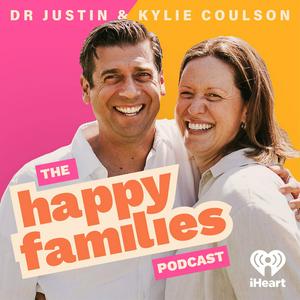
About Dr Justin Coulson's Happy Families
Deciding which parenting advice to follow? Join the thousands of mums and dads who turn to Australia’s most downloaded parenting podcast.
Dr Justin Coulson and his wife Kylie bring real parenting solutions every day, cutting through the noise of modern advice with clear, practical guidance for every step of parenting.
From early childhood challenges to the complexities of the teenage years, each daily episode offers simple, evidence-based strategies to help you feel more confident in your decisions and more connected to your kids.
Podcast websiteListen to Dr Justin Coulson's Happy Families, Scrolling 2 Death and many other podcasts from around the world with the radio.net app
Get the free radio.net app
- Stations and podcasts to bookmark
- Stream via Wi-Fi or Bluetooth
- Supports Carplay & Android Auto
- Many other app features
Get the free radio.net app
- Stations and podcasts to bookmark
- Stream via Wi-Fi or Bluetooth
- Supports Carplay & Android Auto
- Many other app features

Dr Justin Coulson's Happy Families
Scan code,
download the app,
start listening.
download the app,
start listening.
Dr Justin Coulson's Happy Families: Podcasts in Family
 South Africa