
Listen to this podcast for free in the app: Download for free in the App Store
radio.net
Sleep timer
Save favourites
233 episodes
THE SEA and FAST ONE LIGHTS OUT!
2026/10/18 | 44 mins.💀 LIGHTS OUT! — "THE SEA"
Original Air Date: March 16, 1943 Cast: Arch Oboler (writer/director), Bernard Grant, and Mercedes McCambridge
Summary
A haunting tale of obsession and revenge set against the endless roar of the ocean. When a shipwreck survivor is rescued from the waves, he brings with him a secret that should have stayed buried beneath the sea. As the tide rises and the voices of the deep begin to whisper, the line between sanity and the supernatural dissolves. The Sea is pure Lights Out! — claustrophobic, poetic, and terrifying — a reminder that the ocean never forgets what it's owed.
🎧 Listen for Oboler's masterful use of sound — the crashing surf becomes the heartbeat of guilt itself.
⚡ LIGHTS OUT! — "FAST ONE"
Original Air Date: June 29, 1943 Cast: Arch Oboler (writer/director), Frank Lovejoy, and Mercedes McCambridge
Summary
Speed kills — and in this episode, it kills spectacularly. A reckless driver who lives for the thrill of the chase discovers that death can move faster than any car on the highway. When he meets a mysterious hitchhiker who seems to know his every move, the race turns fatal in ways he never imagined. Fast One is a high‑octane morality play about arrogance, adrenaline, and the moment when the accelerator becomes the trigger.
🎧 A perfect "Lights Out!" blend of pulp energy and existential dread — where the roar of the engine becomes the scream of fate.LORD MARLEY'S GHOST and THE WORD LIGHTS OUT!
2026/10/11 | 55 mins.⭐ 1001 GHOST, CHILLER & LOVECRAFT STORIES
SHOW NOTES — LIGHTS OUT! DOUBLE FEATURE
"LORD MARLEY'S GHOST" & "THE WORD"
⭐ LORD MARLEY'S GHOST
Lights Out! was famous for pushing radio horror into places no other show dared go, and Lord Marley's Ghost is a perfect example — a supernatural thriller wrapped in aristocratic dread, old‑world secrets, and the kind of eerie atmosphere that made Lights Out legendary.
The story centers on Lord Marley, a man whose past refuses to stay buried. When strange sounds echo through his estate and a ghostly presence begins to stalk him, Marley must confront the truth he's tried to outrun. Is it madness? Is it guilt? Or is it something far older — and far more determined — than either?
This episode blends gothic tension, spectral visitations, and a slow‑building sense of doom that keeps listeners leaning in until the final moment. A classic Lights Out tale of haunting, punishment, and the inescapable weight of one's past.
⭐ THE WORD
One of the most unforgettable episodes in the entire Lights Out canon.
Two newlyweds, full of excitement and possibility, climb to the top of the Empire State Building for a nighttime view of New York City. But what begins as a romantic moment becomes a nightmare when the world below them… vanishes.
No lights. No movement. No sound. No civilization.
Just silence — and the terrible realization that they may be the last witnesses to humanity's disappearance.
The Word is eerie, imaginative, and shockingly modern in its apocalyptic tone. It's a story of isolation, cosmic dread, and the terrifying fragility of the world we take for granted. Lights Out at its absolute best.
⭐ LIGHTS OUT DOUBLE PLAYS — NOW THROUGH HALLOWEEN
To celebrate the Halloween season, 1001 Ghost, Chiller & Lovecraft Stories will be running Lights Out Double Plays — two classic episodes back‑to‑back every week through October. These are some of the most chilling, inventive, and atmospheric radio dramas ever produced, and they're perfect for late‑night listening.
If you love vintage horror, surreal twists, and stories that leave you thinking long after the final line… you're in the right place.
⭐ ABOUT "LIGHTS OUT!"
Created by Wyllis Cooper and later written and hosted by Arch Oboler, Lights Out! was radio's first true horror series — a show that didn't just tell scary stories, but pushed boundaries. It experimented with sound, psychology, surrealism, and shock in ways no other program dared.
Listeners tuned in for:
Supernatural hauntings
Science‑fiction nightmares
Psychological terror
Strange disappearances
Ghosts, monsters, and cosmic dread
And endings that often left audiences stunned
It remains one of the most influential horror programs ever broadcast — and a perfect fit for your Halloween lineup.THE BLACK CAT by EDGAR ALLAN POE
2026/10/05 | 26 mins.1001 Ghost, Chiller & Lovecraft Stories
SHOW NOTES – The Black Cat by Edgar Allan Poe
Episode Summary
Tonight's story is one of Edgar Allan Poe's darkest psychological tales — a descent into guilt, madness, and the terrifying belief that the past can claw its way back into the present. The Black Cat first appeared in 1843 and remains one of Poe's most disturbing explorations of the human mind under pressure. It is a confession, a warning, and a portrait of a man who insists he is sane… even as every word proves otherwise.
In this first‑person narrative, a once‑gentle man becomes consumed by alcohol, rage, and superstition. His beloved pets suffer first, then his household, and finally his own conscience. Poe builds the horror slowly — not through ghosts or monsters, but through the horrifying transformation of a man who believes he is still in control. The black cat, Pluto, becomes both victim and symbol, and the second cat… well, that's where Poe's genius truly shows.
This is a story of cruelty, guilt, and the terrifying idea that the truth always finds a way to reveal itself.
Why This Story Endures
Poe understood that the most frightening monsters are the ones living inside us. The Black Cat is a masterclass in psychological horror — a tale where the supernatural may or may not be real, but the consequences certainly are. It's a story that forces readers to confront the darker corners of human nature, and it remains one of Poe's most analyzed works for its themes of addiction, violence, and moral collapse.
About the Author
Edgar Allan Poe (1809–1849) was America's master of the macabre — a poet, critic, and storyteller whose works shaped the entire genre of psychological and supernatural horror. His stories continue to inspire writers, filmmakers, and readers around the world nearly two centuries later.
Support the 1001 Stories Network
If you enjoy our weekly episodes and want to help us keep the lights on at www.bestof1001stories.com, please consider supporting us at: www.patreon.com/1001storiesnetwork (patreon.com in Bing)
Your support is vital in maintaining our huge archive of classic stories, mysteries, chillers, and supernatural tales — and in helping us continue to bring these timeless works to listeners around the world.
Release Schedule
New ghost, chiller, and Lovecraft‑style stories release every week. Stay tuned for more classic supernatural fiction from the masters of the genre.
Catch ALL of our shows at one place by going to www.bestof1001stories.com
Learn more about your ad choices. Visit podcastchoices.com/adchoicesNARRATIVE ABOUT CLARENCE FROM SUSPENCE
2026/09/27 | 29 mins.⭐ SHOW NOTES — "Narrative About Clarence" (Suspense, 1944)
1001 Ghost, Chiller & Lovecraft Stories
Tonight's episode comes from one of the greatest thriller series of the Golden Age of Radio — Suspense, CBS's long‑running masterpiece of psychological horror. First broadcast on March 16, 1944, Narrative About Clarence is a slow‑burn chiller that creeps up on you one unsettling detail at a time.
The story centers on a strange houseguest named Clarence — polite, soft‑spoken, and unnervingly calm — whose presence begins to twist the household around him. Through hypnotism, suggestion, and a kind of quiet domination, Clarence exerts a power that no one can quite explain… until it's far too late.
This is classic Suspense:
eerie atmosphere
psychological manipulation
a creeping sense of dread
and a final twist that lands with a cold shiver
It's the kind of story that reminds you why radio horror worked so well — because the terror lived in your imagination, not on a screen.
⭐ Why This Episode Still Works
A masterclass in slow, psychological tension
A villain who never raises his voice — and never needs to
A story that feels like it could have come from Lovecraft's circle of weird fiction
A perfect example of how radio used silence as a weapon
If you enjoy stories where the horror comes from the mind rather than the monster, Narrative About Clarence is a gem.
⭐ If You're New to 1001 Ghost, Chiller & Lovecraft Stories…
This is the perfect episode to start with. Every week we bring you:
classic ghost stories
supernatural chillers
eerie sci‑fi
psychological thrillers
and the best of old‑time radio horror
All curated, narrated, and restored with the care these classics deserve.
Give the show a try — you'll find a treasure trove of forgotten nightmares waiting for you.
⭐ Support the 1001 Stories Network
If you enjoy these episodes and want to help keep them coming, please consider supporting us at: patreon.com/1001storiesnetwork
Your support helps us restore old radio audio, research forgotten episodes, and keep the entire 1001 network strong.THE BLOODSTAINED BRICK BAT and THE BRASS BUTTON THE BLACK MUSEUM
2026/09/20 | 52 mins.The Black Museum was based on real-life cases from the files of Scotland Yard's Black Museum. The programme was transcribed in 1951 and was broadcast in the United States in 1952 on Mutual.[3] More than 500 of the network's stations carried it.[4] Ira Marion was the scriptwriter and music for the series was composed and conducted by Sidney Torch. This same music was used for the opening credits of, and incidental music in, the 1955 film They Can't Hang Me, starring Terence Morgan.
Orson Welles was both host and narrator of stories of horror and mystery, based on Scotland Yard's collection of murder weapons and various ordinary objects once associated with historical true crime cases. The show's opening began:
"This is Orson Welles, speaking from London. (Sound of Big Ben chimes) The Black Museum ... a repository of death. Here in the grim stone structure on the Thames which houses Scotland Yard is a warehouse of homicide, where everyday objects ... a woman's shoe, a tiny white box, a quilted robe ... all are touched by murder." Robert Rietti played the lead roles and Keith Pyott was often in the cast.
In 2002, Towers produced The Black Museum for television and hired director Gregory Mackenzie to be the showrunner and director for the anthology series using the original narration by Welles. The adaptation was shot on location in London in a film noir style and the pilot starred Michael York as Scotland Yard Inspector Russell.
More Fiction podcasts

Trending Fiction podcasts





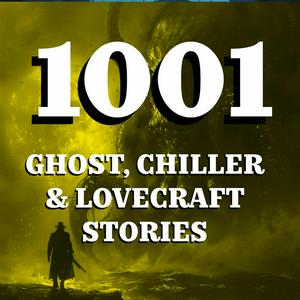
About 1001 Ghost, Chiller & Lovecraft Stories
A spine-chilling collection of classic stories and tales from the other side featuring classics from a wide variety of writers that include H.P. Lovecraft, Edgar Allen Poe, Algernon Blackwood, M.R. James, and many others. Radio dramas (suspense, horror, and gothic) will also be featured.
Podcast websiteListen to 1001 Ghost, Chiller & Lovecraft Stories, The Archers and many other podcasts from around the world with the radio.net app
Get the free radio.net app
- Stations and podcasts to bookmark
- Stream via Wi-Fi or Bluetooth
- Supports Carplay & Android Auto
- Many other app features
Get the free radio.net app
- Stations and podcasts to bookmark
- Stream via Wi-Fi or Bluetooth
- Supports Carplay & Android Auto
- Many other app features
1001 Ghost, Chiller & Lovecraft Stories
Scan code,
download the app,
start listening.
download the app,
start listening.
 South Africa