
Listen to this podcast for free in the app: Download for free in the App Store
radio.net
Sleep timer
Save favourites
1063 episodes
Does Heavy Outperform Moderate In Building Muscle After 50
2026/11/06 | 26 mins.Building muscle after 50 doesn't mean you have to lift heavier every time you walk into the gym.
What if moderate weights and higher repetitions could deliver similar results?
A 2026 study involving women averaging 68 years old offers an interesting perspective on how we approach resistance training as we age. The findings challenge the idea that heavier is always better and highlight why effort, progression, and individual needs matter more than simply increasing the weight.
Discover how to choose the right resistance, build muscle after 50 safely, and make strength training work for your body and your life.
Questions We Answer in This Episode
[00:01:37] Is lifting heavier really more effective than using moderate weights for building muscle after 50?
[00:02:18] What did the study comparing 10-rep and 15-rep resistance training reveal about muscle growth in older women?
[00:04:00] How can you tell whether your strength training is building muscle, and are you measuring the right numbers?
[00:13:39] What's the difference between increasing muscle size and improving maximal strength?
[00:15:33] When should you increase your weights, and why is mastering proper movement more important than rushing to lift heavier?
[00:20:14] How can you adjust your resistance training after a break, illness, or time away from exercise?
[00:21:38] What other ways can you challenge your muscles and measure progress without constantly increasing the weight?
If this episode made you flip your workout routine — share it!
👉 Post to your stories, tag @Flipping50TV in Instagram and share the episode to your best friend.
👉 Meet other women, who are done with outdated fitness advice, at Flipping50 Facebook Group.
👉 Subscribe, share, and leave a review if you’re ready to flip the script on Flipping 50 The Stronger Way.
References:
Experimental Gerontology. 2026, PMID: 42551773.
Other Episodes You Might Like:
Previous Episode - The C-Section Hangover that Shows Up as Back Pain or Painful Seggs in Menopause
Next Episode - What Actually Is IBS? The Girl's Guide to Guts
More Like This - Is 15 Weeks Enough to Build Muscle PostMenopausal? Science Unpacked
Resources:
Work with Debra with an Ultimate Assessment
Flipping 50 App on iOS App Store & Google Play
Questions / Contact Debra on Instagram or Facebook Group
FLIP Menopause program - Join the next live cohort
Flipping 50 Master class - Choose your session here
Easy At-Home Self-Assessment Test - Flipping 50 Strong Aging Index
Hot Off The Press! The science for staying strong.
Get the full episode Show Notes HERE.The C-Section Hangover that Shows Up as Back Pain or Painful Seggs in Menopause
2026/11/03 | 44 mins.C-section scar tissue pain may be connected to more than the scar you see in the mirror.
Could an old C-section be influencing your posture, movement, core function, or intimacy decades later?
The good news — It's not necessarily too late
What happens beneath the surface?
Why do scar tissue and fascia deserve a closer look?
How is it connected to painful seggs?
If you've wondered whether C-section scar tissue pain could still be affecting your body in midlife, this conversation is one you won't want to miss.
My Guest:
Janette Yee is a Toronto-based C-section Athletic Therapist and internationally recognized advocate for better postpartum rehabilitation. She is also a former 12-year rugby player with the Toronto Scottish RFC, she is also a Rugby Ontario Hall of Fame inductee and a new HYROX competitor.
With 20+ years of experience in manual therapy and exercise, she created groundbreaking Cesarean Recovery programs to help women reclaim their strength and recovery after childbirth.
Questions We Answer in This Episode:
[00:05:51] What exactly is a C-section shelf, and how does it develop?
[00:12:00] Is a C-section shelf just an appearance concern, or can it affect health, core function, and stability?
[00:17:13] Is it ever too late to address C-section scar tissue, discomfort, or changes in the abdomen?
[00:17:53] What's the difference between scar massage and fascial massage, and what can each accomplish?
[00:19:49] How much time and effort does it take to see meaningful changes?
[00:26:57] What common mistakes keep women from improving their C-section shelf or post-pregnancy abdomen?
[00:38:49] Could an old C-section contribute to painful sex years later?
Connect with Janette:
Website - Janette Yee’s The C-Section Shelf 10-Day Challenge
Facebook - Janette Yee
Instagram - @askjanette
TikTok - @askjanette
YouTube - AskJanette
Connect with Flipping 50:
Facebook Group - Flipping50 Insiders
Instagram - @Flipping50TV
YouTube - @Flipping50TV
More Episodes - Flipping 50 The Stronger Way
Other Episodes You Might Like:
Previous Episode - Does Cardio After Weights Change Your Results After 40 and Does More Protein Help?
Next Episode - Does Heavy Outperform Moderate In Building Muscle After 50
More Like This - Is There Really a Best Time to Strength Train After 50
Resources:
Work with Debra with an Ultimate Assessment
Flipping 50 App on iOS App Store & Google Play
Questions / Contact Debra on Instagram or Facebook Group
FLIP Menopause program - Join the next live cohort
Flipping 50 Master class - Choose your session here
Get the full episode Show Notes HERE.Does Cardio After Weights Change Your Results After 40 and Does More Protein Help?
2026/10/30 | 22 mins.Should you do cardio after strength training?
How much protein do you really need to build muscle after 50?
If you've ever wondered whether cardio is interfering with your strength gains—or whether you need to eat more protein to see results—this episode will help you look beyond the headlines.
Let’s dive into the research on strength training, cardio, and protein intake in women ages 40–77. Make smarter decisions about your workouts based on your individual goals.
When it comes to fitness after 50, the goal isn't to follow every new trend. It's to understand what works for you — cardio after strength training, or should you do cardio then lift the weights?
Questions We Answer in This Episode
What research reveals about doing cardio after strength training.
How strength training and cycling affected strength, aerobic fitness, and body composition in one study?
Did higher assigned protein targets improve estimated muscle mass?
Why should your primary fitness goal determine how you organize your workouts?
Why doesn't the study prove that cardio damages muscle or that more protein is always better?
How to approach cardio, strength training, and walking without unnecessarily complicating your routine?
If this episode made you flip your workout routine — share it!
👉 Post to your stories, tag @Flipping50TV in Instagram and share the episode to your best friend.
👉 Meet other women, who are done with outdated fitness advice, at Flipping50 Facebook Group.
👉 Subscribe, share, and leave a review if you’re ready to flip the script on Flipping 50 The Stronger Way.
References:
Journal of the International Society of Sports Nutrition. 2026, PMID: 42735207.
Other Episodes You Might Like:
Previous Episode - Is Your Nervous System Holding You Back? HRV, Stress, and Recovery in Midlife
Next Episode - The C-Section Hangover that Shows Up as Back Pain or Painful Seggs in Menopause
More Like This:
6 Menopause Fitness Questions From the Community
3 Steps to Gain Lean Muscle in Menopause
Building Muscle and Losing Fat in Menopause and Beyond
Cortisol and Cardio for Women Over 40: What Your Heart Needs Now
Resources:
Work with Debra with an Ultimate Assessment
Flipping 50 App on iOS App Store & Google Play
Questions / Contact Debra on Instagram or Facebook Group
FLIP Menopause program - Join the next live cohort
Flipping 50 Master class - Choose your session here
Easy At-Home Self-Assessment Test - Flipping 50 Strong Aging Index
Hot Off The Press! The science for staying strong.
Get the full episode Show Notes HERE.Is Your Nervous System Holding You Back? HRV, Stress, and Recovery in Midlife
2026/10/27 | 46 mins.Nervous system recovery in midlife may be the missing piece when your usual workouts, recovery routines, and sheer determination no longer deliver the results you expect.
Are you pushing through fatigue or chasing better recovery scores?
For women in midlife and beyond, HRV, stress, and the stories you tell yourself can influence the way you respond to everyday demands.
Discover why building capacity—not simply pushing harder—may help you approach exercise, recovery, and midlife with greater awareness.
If you're ready to rethink stress and discover a more mindful approach to nervous system recovery in midlife, this conversation is for you.
My Guest:
Cameron Allen is the founder of Neuro Progeny, where he builds capacity training programs for women navigating perimenopause and menopause. He brings 18 years in neuroimaging, more than 8,000 brain scans reviewed, and peer-reviewed research published alongside clinicians and geneticists. His work reframes fatigue as information about a woman's metabolic budget rather than an obstacle to push through, and treats HRV as a mirror on capacity rather than a score to chase.
Questions We Answer in This Episode:
[00:00:00] How did your career journey lead you to the work you do today?
[00:00:00] What is HRV, and what can it tell us about nervous system resilience and recovery?
[00:00:00] What is a “metabolic budget,” and how does the body allocate its available energy?
[00:00:00] How can we increase our metabolic budget instead of continually pushing harder?
[00:00:00] How can we reconnect with the version of ourselves who feels most alive and capable?
[00:00:00] How can breathing practices support HRV and nervous system regulation?
[00:00:00] Do we really need more grit, or do we need to build greater capacity?
Connect with Cameron:
Website - Neuro Progeny
Facebook - Neuro Progeny
Instagram - @neuro.progeny
LinkedIn - Cameron Allen
Connect with Flipping 50:
Facebook Group - Flipping50 Insiders
Instagram - @Flipping50TV
YouTube - @Flipping50TV
More Episodes - Flipping 50 The Stronger Way
Resources:
Work with Debra with an Ultimate Assessment
Flipping 50 App on iOS App Store & Google Play
Questions / Contact Debra on Instagram or Facebook Group
FLIP Menopause program - Join the next live cohort
Flipping 50 Master class - Choose your session here
Get the full episode Show Notes HERE.Is 15 Weeks Enough to Build Muscle PostMenopausal? Science Unpacked
2026/10/23 | 32 mins.This episode is sponsored by BEAM Minerals.
BEAM Minerals - Get 20% off your first order at https://beamminerals.com/FLIPPING50 with code FLIPPING50.
Is 15 weeks enough to build muscle postmenopausal?
If you're wondering whether your muscles can still grow stronger in postmenopause, the science is here.
You'll learn how to approach strength training, find the right balance between workouts and recovery, and measure progress beyond the number on the scale.
Discover what the research actually tells us about whether 15 weeks is enough to build muscle postmenopausal — and how to put those findings to work in your own strength-training routine.
Questions We Answer in This Episode
[00:01:48] The study: 15 weeks being enough to build muscle postmenopausal.
[00:12:10] Why isn't the scale telling the whole story?
[00:16:52] Do you really need to lift three days a week?
[00:18:23] Can you get stronger without changing everything?
[00:20:54] How do you build strength safely after 50?
[00:26:04] How do you know your strength training is working?
If this episode made you flip your workout routine — share it!
👉 Post to your stories, tag @Flipping50TV in Instagram and share the episode to your best friend.
👉 Meet other women, who are done with outdated fitness advice, at Flipping50 Facebook Group.
👉 Subscribe, share, and leave a review if you’re ready to flip the script on Flipping 50 The Stronger Way.
References:
Maturitas. 2026, PMID: 41687563.
Other Episodes You Might Like:
Previous Episode - Perimenopause's Long Game: How It Shapes Your Health for Years to Come
More Like This:
3 Steps to Gain Lean Muscle in Menopause
6 Menopause Fitness Questions From the Community
Resources:
Work with Debra with an Ultimate Assessment
Flipping 50 App on iOS App Store & Google Play
Questions / Contact Debra on Instagram or Facebook Group
FLIP Menopause program - Join the next live cohort
Flipping 50 Master class - Choose your session here
Measure what matters using the Flipping 50 Strong Aging Index
Hot Off The Press! The science for staying strong.
Get the full episode Show Notes HERE.
More Fitness podcasts
Trending Fitness podcasts


About Flipping 50 the Stronger Way
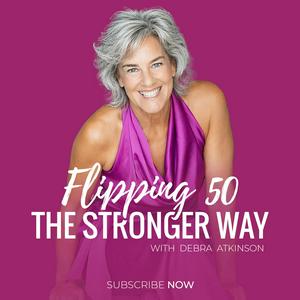
The podcast for women in menopause and beyond who want to change the way they age. Fitness, wellness, and health science put into practical tips you can use today. You still got it, girl!
Podcast websiteListen to Flipping 50 the Stronger Way, TRT DAD Unscripted and many other podcasts from around the world with the radio.net app
Get the free radio.net app
- Stations and podcasts to bookmark
- Stream via Wi-Fi or Bluetooth
- Supports Carplay & Android Auto
- Many other app features
Get the free radio.net app
- Stations and podcasts to bookmark
- Stream via Wi-Fi or Bluetooth
- Supports Carplay & Android Auto
- Many other app features
Flipping 50 the Stronger Way
Scan code,
download the app,
start listening.
download the app,
start listening.
Flipping 50 the Stronger Way: Podcasts in Family
 South Africa

