
Listen to this podcast for free in the app: Download for free in the App Store
radio.net
Sleep timer
Save favourites
61 episodes
The Return of the King by J.R.R. Tolkien
2026/10/13 | 1h 26 mins.In this season finale of The Classical Mind, Father Wesley Walker and Dr. Junius Johnson bring their epic journey through J.R.R. Tolkien’s The Lord of the Rings trilogy to a close with The Return of the King. Picking up from the alternating structural threads of the narrative, Junius and Wesley delve into why Book Five stands out as a high-water mark for epic storytelling. They unpack Tolkien’s mastery of war narrative—drawing comparisons to Homer’s Iliad—showing how Middle-earth’s sweeping macro-level conflicts are fundamentally decided by micro-level acts of individual courage and moral choice.
Endnotes:
* Junius: Under Heaven by Guy Gavriel Kay
* Wesley: The Lord of the Rings: Return of the King video game
This is a public episode. If you'd like to discuss this with other subscribers or get access to bonus episodes, visit www.theclassicalmind.com/subscribeBonus Episode: The Fall of Arthur with Malcolm Guite
2026/09/21 | 1h 23 mins.Dr. Junius Johnson and Fr. Wesley Walker are joined by poet-priest-scholar Malcolm Guite for a deep dive into J.R.R. Tolkien’s unfinished alliterative poem, The Fall of Arthur — and make the case that it deserves to be read as seriously as anything else in Tolkien’s body of work.
Recommended Reading
* Malcolm: The Inklings and King Arthur, ed. Sørina Higgins
* Junius: Marie Borroff’s translation of Sir Gawain and the Green Knight
* Wesley: Malcolm Guite’s Galahad and the Grail (with The Coming of Arthur forthcoming in November)
This is a public episode. If you'd like to discuss this with other subscribers or get access to bonus episodes, visit www.theclassicalmind.com/subscribeThe Two Towers by J.R.R. Tolkien
2026/09/01 | 1h 10 mins.The middle book of a trilogy is always the dark one, and The Two Towers is no exception. Fr. Wesley Walker and Dr. Junius Johnson return to Middle-earth for the second leg of The Lord of the Rings, and this time things really are on the edge of the knife.
Gollum, Hugh of Saint Victor, Ents and the Entmoot, Gimli, Sarumon and Gandalf, and Boromir and Faramir. It’s all there!
Endnotes
* Junius: Tolkien’s The Legend of Sigurd and Gudrún
* Wesley’s endnote: Realms of Tolkien: Images of Middle-earth
This is a public episode. If you'd like to discuss this with other subscribers or get access to bonus episodes, visit www.theclassicalmind.com/subscribeThe Classical Mind Goes to the Movies: Christopher Nolan's Odyssey
2026/08/14 | 1h 2 mins.Warning: this episode discusses the film in full, spoilers included. If you haven’t seen it yet, go watch it first and come back.
Fr. Wesley Walker and Dr. Junius Johnson head to the theater for another Classical Mind Goes to the Movies episode, this time tackling Christopher Nolan’s big-screen adaptation of The Odyssey.
Have you seen Nolan's The Odyssey? Let us know what you thought in the comments or in our community chat on Substack.
This is a public episode. If you'd like to discuss this with other subscribers or get access to bonus episodes, visit www.theclassicalmind.com/subscribeBonus Episode: The Forge of Friendship
2026/08/10 | 41 mins.Everyone knows The Lord of the Rings and The Chronicles of Narnia. Fewer people know the full story of the friendship that helped make both of them possible. In this special bonus episode, Dr. Junius Johnson sits down with Kirk Manton of Eastgate Creative to talk about The Forge of Friendship, a five-part documentary series, ten years in the making, telling the story of the relationship between J.R.R. Tolkien and C.S. Lewis.
Dr. Manton walks through how the project began small and grew into a multi-part documentary spanning the two writers’ entire life together, and how, along the way, the project itself became something of a case study in its own subject: it has connected Tolkien fans and Lewis fans, two overlapping but distinct communities, into new friendships of their own. Junius and Kirk also discuss what makes the Lewis-Tolkien friendship worth telling in this much depth, why Eastgate Creative chose to build this project as a donor-funded nonprofit rather than a traditional investor-backed production, and what’s still ahead as the documentary moves through post-production toward release.
This is a great listen for anyone who loves Tolkien, Lewis, or the Inklings — and a chance to support a project built entirely on donations from people who believe this story is worth telling well.
Support the Project
Eastgate Creative has funded this documentary entirely through donations — no investors, no profit distributions. Every dollar goes straight into finishing the production and funding the next generation of Christian filmmakers.
* Watch the trailer & learn more: eastgatecreative.org
* Sign up for updates: Join the Eastgate Creative newsletter
* Donate directly: Support The Forge of Friendship
This is a public episode. If you'd like to discuss this with other subscribers or get access to bonus episodes, visit www.theclassicalmind.com/subscribe
More Arts podcasts






Trending Arts podcasts










About The Classical Mind
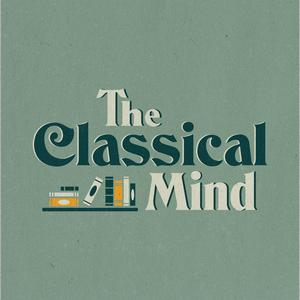
Conversations on the Great Books. New episodes on the first Tuesday of every month. www.theclassicalmind.com
Podcast websiteListen to The Classical Mind, Middagvervolgverhaal and many other podcasts from around the world with the radio.net app
Get the free radio.net app
- Stations and podcasts to bookmark
- Stream via Wi-Fi or Bluetooth
- Supports Carplay & Android Auto
- Many other app features
Get the free radio.net app
- Stations and podcasts to bookmark
- Stream via Wi-Fi or Bluetooth
- Supports Carplay & Android Auto
- Many other app features
The Classical Mind
Scan code,
download the app,
start listening.
download the app,
start listening.
 South Africa
