

Listen to this podcast for free in the app: Download for free in the App Store
radio.net
Sleep timer
Save favourites
PK360 Audio
Rip Stalvey, Jeff Mattocks, Carey Blackmon, and Sue Dobson
Latest episode
160 episodes
Linebreeding Chickens: Build Consistency Without Losing Vigor – Audio Edition
2026/09/21 | 1h 4 mins.Linebreeding can reveal weaknesses already hiding in a flock—and that is exactly why careful breeders use it.
This Audio Edition was adapted from a PK360 LIVE conversation featuring Rip Stalvey, poultry nutritionist Jeff Mattocks, Karen Johnson, and guest Logan Courtney. Logan is a sixth-generation Oklahoma farmer who uses linebreeding with registered Jersey dairy cattle, Hereford cattle, and Light Sussex chickens.
Together, they discuss what linebreeding can accomplish, why it sometimes produces disappointing generations, and how selection, records, nutrition, and patience work together to build a more consistent flock.
Topics include:
• What linebreeding is and what it can accomplish
• Why it exposes hidden genetic problems
• Clan breeding and practical systems for smaller flocks
• Record keeping, wing bands, and pedigree software
• Protecting size, vigor, fertility, and production
• Choosing breeders and evaluating each generation
• Starting with limited breeding stock
• Bringing a needed improvement into an established line
• Giving birds the nutrition needed to express their genetic potential
Original PK360 LIVE video broadcast date: February8, 2024
Prefer the original video? Watch the PK360 LIVE Video Edition here:
https://youtube.com/live/96mZJxuCYog
If you enjoy thoughtful, experience-based poultry information like this, that’s what this channel is all about.
#PoultryBreeding #ChickenGenetics #PoultryKeepers360
Chapters and timestamps
0:00 Meet Logan Courtney
4:46 What Linebreeding Really Does
8:22 Consistency, Selection and Patience
14:09 Records, Wing Bands and Pedigrees
16:58 Building a Clan Breeding System
22:57 Protecting Production Qualities
27:15 A Practical Program for Smaller Flocks
31:24 Matings That Reveal Hidden Genetics
36:47 Exposing and Removing Genetic Problems
38:31 Maintaining Vigor and Choosing Breeders
43:11 Nutrition and Genetic Potential
47:26 Egg Selection and When to Cull
52:11 Can You Start With One Pair?
56:52 Introducing Improvements Into a Line
1:00:03 How Long Should You Use a Proven Male?
1:03:26 Closing Thoughts and Future Questions
Join our Facebook Groups:
Poultry Keepers 360 - - https://www.facebook.com/groups/354973752688125
Poultry Breeders Nutrition - https://www.facebook.com/groups/4908798409211973Winter Flock Reset: Fix What Isn’t Working - Audio Edition
2026/09/14 | 1h 9 mins.Winter gives poultry keepers something we rarely have during the busy season: an opportunity to slow down, look back, and decide what genuinely needs improvement.
A winter flock reset does not mean changing everything. It means identifying the routines, systems, and decisions that made poultry keeping harder than necessary—and correcting them before another breeding or hatching season begins.
In this episode, Rip Stalvey, Jeff Mattocks, Carey Blackmon, and Sue Dobson discuss how to evaluate the past year honestly. They examine breeding results, recordkeeping, housing, ventilation, watering systems, mud and litter problems, nutrition, body condition, winter enrichment, and preparations for the next breeding season.
You’ll also hear why changing several things at once makes it nearly impossible to determine what worked, how your birds’ behavior can reveal whether a change is helping, and why some successful parts of your system should be left alone.
The goal is not a complete overhaul. It is a more manageable flock, stronger birds, better breeding decisions, and fewer avoidable problems next year.
If you enjoy thoughtful, experience-based poultry information like this, that’s what this channel is all about.
#PoultryKeepers360 #WinterChickenCare #FlockManagement
TIMESTAMPS & CHAPTERS
00:00 Using winter as a practical reset
01:24 Evaluating the past year’s results
04:06 Learning from experienced poultry keepers
13:38 Records, observations, and breeding plans
17:40 Housing and ventilation
22:30 Water, mud, litter, and manure
27:56 A word from Fertrell
30:11 Winter watering systems and frostbite
33:24 Viewer questions about garlic and flock health
37:23 What body condition reveals about feeding
40:09 Feed quality, supplements, and behavior
47:12 How much feed do chickens need?
51:22 Preventing winter boredom and aggression
56:35 Selecting and pairing breeding birds
59:39 Winter jobs that prepare for breeding season
1:02:50 Is the system failing—or the follow-through?
1:03:51 Keep what works and measure the results
1:05:44 Change one thing at a time
1:07:52 Breeding goals and difficult selection decisions
1:09:24 Closing thoughts
Listen to the Audio Edition here: https://www.youtube.com/playlist?list=PLDRODbVf9y3g
Watch the Video Edition here: https://www.youtube.com/watch?v=fGfX27f-7_I
Join our Facebook Groups:
Poultry Keepers 360 - - https://www.facebook.com/groups/354973752688125
Poultry Breeders Nutrition - https://www.facebook.com/groups/4908798409211973How to Prepare Your Chickens for Breeding Season
2026/09/07 | 1h 5 mins.Successful breeding begins long before the first eggs go into the incubator.
In this episode, Carey Blackmon and poultry nutritionist Jeff Mattocks explain how to prepare a flock for breeding season—from choosing the right birds and setting breeding goals to managing lighting, nutrition, housing, and nest boxes.
We discuss:
The difference between hatching chicks and building a breeding program
Choosing breeders with the fewest serious faults
Deciding what you want your flock to become
Using linebreeding to improve consistency
What inbreeding depression really looks like
Choosing the right time of year to hatch
Preparing breeders through lighting management
Adjusting light for younger and older birds
Improving breeder nutrition before collecting eggs
Egg size and its effect on chick quality
Amino acids, vitamins, and chick vigor
Preparing clean, comfortable nest boxes
Whether greens have a place in the breeder diet
Breeding season is not simply a matter of putting a rooster with a few hens. Better chicks begin with healthier breeders, clearly defined goals, and thoughtful preparation.
If you enjoy thoughtful, experience-based poultry information like this, that’s what this channel is all about.
Poultry Keepers 360
Helping Poultry Keepers Make Better Decisions.
Chapters and Timestamps
0:00 Opening Conversatio
7:22 Getting Ready for Breeding Season
9:38 Hatching Chickens vs Breeding Poultry
11:12 Where a Breeding Program Begins
12:52 Where Should Your Flock Be in Five Years?
15:58 Turning Goals Into a Breeding Plan
16:20 Linebreeding, Inbreeding, and Predictability
18:05 What Inbreeding Depression Really Means
22:38 Choosing the Right Hatch Season
23:19 Preparing Breeders With Light
25:22 Light Color and Intensity
29:40 Increasing Day Length Gradually
32:15 Lighting Older Breeding Birds
38:55 Continuous-Flow Watering Update
43:15 Feeding Birds for Breeding Season
44:35 Egg Size and Hatching Quality
46:29 Amino Acids and Chick Vigor
49:17 Nest Boxes for Breeding Pens
50:57 Bedding and Nest Cleanliness
53:32 Five-Gallon Bucket Nest Boxes
59:57 Do Breeding Birds Need Greens?
1:03:33 Alfalfa and Other Green Feeds
1:06:03 Final Thoughts
This Audio Edition was adapted from a PK360 LIVE originally broadcast on September 18, 2025. Prefer to watch the original Video Edition? You can find it here: https://www.youtube.com/live/tagqQL2d1_E
Join our Facebook Groups:
Poultry Keepers 360 - - https://www.facebook.com/groups/354973752688125
Poultry Breeders Nutrition - https://www.facebook.com/groups/4908798409211973Is Your Chicken Coop Ready For Winter? Don't Forget The Air!
2026/08/31 | 1h 1 mins.When cold weather arrives, many poultry keepers instinctively close their coops tightly to keep their chickens warm. Unfortunately, that can trap moisture, ammonia, and stale air—creating conditions far more dangerous than the cold itself.
In this episode of PK360 LIVE, Rip Stalvey, Jeff Mattocks, Carey Blackmon, and Sue Dobson take a practical look at winter air quality and what poultry keepers can learn by observing their birds and the conditions inside their coops.
The team discusses:
• The difference between healthy ventilation and a harmful draft
• Why dry birds generally tolerate cold temperatures remarkably well
• How moisture and condensation accumulate inside winter housing
• Why ammonia can harm chickens before people can smell it
• How to calculate coop volume and choose an exhaust fan
• Timed and forced-air ventilation
• The connection between bedding, carbon, moisture, and ammonia
• What respiratory behavior and feather condition may reveal
• How stocking density and coop construction affect air quality
• Common winter ventilation mistakes
• The risks associated with supplemental heat
Good winter management is not about creating human comfort inside a chicken coop. It is about protecting birds from direct weather while maintaining clean, dry, healthy air.
Poultry Keepers 360 brings breeding, management, and nutrition together to help small-flock keepers understand their birds and make better-informed decisions.
If you enjoy thoughtful, experience-based poultry information like this, that’s what this channel is all about.
Our sincere thanks to The Fertrell Company for sponsoring PK360 LIVE and supporting practical poultry education.
TIMESTAMPS AND CHAPTERS
0:00 Why winter air quality matters
1:57 Cold temperatures versus moisture and wind
3:07 Ventilation versus drafts
4:35 Where an exhaust fan should be placed
7:17 Calculating coop volume and fan runtime
9:38 A mentor’s cold-weather ventilation system
14:30 Where winter moisture comes from
16:08 Ammonia can cause harm before you smell it
19:09 Bedding, carbon, and ammonia control
21:02 Biochar, activated charcoal, and peat moss
25:14 Should ventilation change with temperature?
26:05 What birds reveal about poor air quality
27:49 Feather condition, humidity, and dietary fat
34:39 What a properly managed coop should smell like
35:51 How chickens behave when they are truly cold
37:32 Ventilating open-sided coops and barns
40:35 A word from The Fertrell Company
42:10 Stocking density and air quality
43:19 Wooden coops versus metal construction
47:26 Common winter ventilation mistakes
48:52 Helping birds adjust to environmental changes
50:26 Balancing weather protection and ventilation
52:45 One change that can improve coop air quality
54:25 Choosing breeds suited to the climate
55:57 The risks of supplemental heat
58:49 Final winter air-quality lessons
Join our Facebook Groups:
Poultry Keepers 360 - - https://www.facebook.com/groups/354973752688125
Poultry Breeders Nutrition - https://www.facebook.com/groups/4908798409211973What’s Really in Your Chicken Feed? Protein, Fat & Fiber Explained - Video Edition
2026/08/24 | 1h 4 mins.Protein percentage is only part of the story when it comes to feeding poultry well. What matters is how protein, amino acids, fats, fiber, and the other components of a diet work together.
In this PK360 discussion, Rip Stalvey, Jeff Mattocks, and Carey Blackmon take a deeper look at three major components of poultry diets—protein, fat, and fiber—and explain why simply choosing the feed with the highest protein number may not give your birds what they actually need.
We discuss vegetable and animal protein sources, why amino acids such as lysine, methionine, and cysteine matter, and how protein needs change as birds grow and enter production. The conversation also explores fish meal, fiber and gut health, the relationship between fat and fiber, different sources of dietary fat, and some of the practical compromises involved in mash, pellet, and crumble feeds. The discussion emphasizes that protein percentage alone can be misleading when amino-acid balance and total feed intake aren't considered.
You'll also hear practical discussion about reading feed tags, feeding chicks and growing birds, breeding-season nutrition, whole grains, oats, feed freshness and storage, and questions from poultry keepers watching the original PK360 LIVE.
Use the chapters below to listen from beginning to end or jump directly to the subject you need.
Poultry Keepers 360 brings together practical experience and thoughtful poultry education to help poultry keepers better understand their birds and make informed decisions about breeding, management, and nutrition.
If you enjoy thoughtful, experience-based poultry information like this, that’s what this channel is all about.
Chapters & Timestamps
0:00 Welcome & What We’re Covering
1:07 Protein Sources in Poultry Diets
3:31 Why Amino Acid Balance Matters
5:03 Animal vs. Vegetable Protein
9:02 Fish Meal & Sustainable Sources
12:13 Fish Meal, Feather Quality & Eggs
16:25 Lysine, Methionine & Cysteine
19:21 How Much Protein Do Chicks Need?
25:07 Protein Needs for Growing Birds
26:13 Developer & Layer Feed
28:30 Do Some Breeds Need More Protein?
29:22 Nutrition for Breeding Stock
30:34 Fertrell Sponsor Break
31:40 Why Fiber Matters
34:31 Fiber, Gut Health & Bird Behavior
35:42 Choosing Effective Fiber Sources
37:42 Whole Oats & Diet Self-Selection
39:00 Balancing Fat and Fiber
40:23 Choosing Better Fat Sources
41:48 Animal Fat & Shelf Life
43:58 Vegetable vs. Animal Fats
45:24 What Fat Does for the Bird
47:35 Reading Fat & Fiber on Feed Tags
49:22 Why Good Fat & Fiber Levels Are Hard to Find
51:15 Whole Grains & Feeding Grit
52:49 Ergot Risk in Rye
53:44 Feed Freshness & Shelf Life
56:09 Mash vs. Pellets
57:32 Chick Feed & Breeder Supplement
58:12 What Is Mash Feed?
1:00:23 How Long Does Feed Stay Nutritious?
1:00:52 Calcium in Poultry Feed
1:03:40 How Long Can Whole Grains Be Stored?
1:05:07 Closing Thoughts
Join our Facebook Groups:
Poultry Keepers 360 - - https://www.facebook.com/groups/354973752688125
Poultry Breeders Nutrition - https://www.facebook.com/groups/4908798409211973
More Home & Garden podcasts
 Simple Farmhouse LifeHome & Garden, Leisure
 Gardeners' Question TimeHome & Garden, Leisure
 On The Ledge | Grow houseplants with the expertsHome & Garden, Leisure
 The MinimalistsHealth & Wellness, Home & Garden, Leisure, Philosophy, Relationships, Society & Culture
 Gardening with the RHSHome & Garden, Leisure
 A Beautiful Mess PodcastHome & Garden, Leisure
 Home Grown with Martha and JamieHome & Garden, Leisure, Society & Culture
 The Cut Flower PodcastHome & Garden, Leisure, Nature, Science
 The joe gardener Show - Organic Gardening - Vegetable Gardening - Expert Garden Advice From Joe Lamp'lHobbies, Home & Garden, Leisure
 BBC Gardeners’ World Magazine PodcastHome & Garden, Leisure, Nature, Science
Trending Home & Garden podcasts
 Homegrown: Your Backyard Garden PodcastEducation, Hobbies, Home & Garden, Leisure
- The Cut Flower PodcastHome & Garden, Leisure, Nature, Science
 The Organic Gardening PodcastHobbies, Home & Garden, Leisure
 Why Women GrowHome & Garden, Leisure
- The joe gardener Show - Organic Gardening - Vegetable Gardening - Expert Garden Advice From Joe Lamp'lHobbies, Home & Garden, Leisure
 Roots and All - Gardening PodcastHobbies, Home & Garden, Leisure
- The MinimalistsHealth & Wellness, Home & Garden, Leisure, Philosophy, Relationships, Society & Culture
- A Beautiful Mess PodcastHome & Garden, Leisure
 Wannabe Clutter Free | Declutter, Simplify, Find FreedomEducation, Home & Garden, Leisure, Self-Improvement
 The Beginner's Garden with Jill McSheehyEducation, Home & Garden, Leisure, Tutorials
- BBC Gardeners’ World Magazine PodcastHome & Garden, Leisure, Nature, Science
 Talking GardensHome & Garden, Leisure
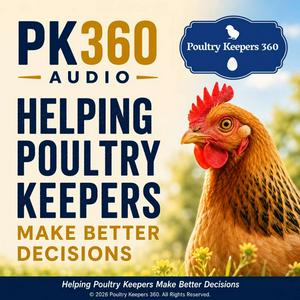
About PK360 Audio
Welcome to PK360 Audio, and thank you for joining us.If you've been with us for a while, you may remember our original Poultry Keepers Podcast. As PK360 has grown, we've learned something important. Simply sharing information isn't enough. We want to help poultry keepers not only learn more, but also become more confident in the decisions they make every day.That's why we've created PK360 Audio.Our mission remains the same—Helping Poultry Keepers Make Better Decisions. What has changed is how we hope to accomplish that mission. Rather than simply telling you what to do, we'll also provide practical tools that help you put what you're learning into practice. Whether it's our Observation Journal, educational Sheets, Decision Trees, or other companion resources, our goal is to help bridge the gap between learning and doing.Most episodes will be adapted from our Field Guide videos and PK360 LIVE programs, making it easy to continue learning while driving, working around the farm, or taking care of everyday chores. You'll also hear occasional audio-exclusive conversations, interviews, and special programs created just for our podcast listeners.You'll also be hearing from the entire PK360 team, including livestock nutritionist Jeff Mattocks, poultry educators Carey Blackmon and Sue Dobson, along with me, Rip Stalvey.Learning doesn't end when an episode is over, so I invite you to join us in the Poultry Keepers 360 Facebook Group, where you'll find our companion tools, thoughtful discussions, and a community of poultry keepers who enjoy learning together.If you have questions, suggestions, or ideas for future episodes, I'd love to hear from you. You can reach me anytime at stalvey.rip@gmail.com.Thank you for joining us. I'm excited about this new chapter, and I hope you'll come along for the journey.Because better observations lead to better decisions.
Podcast websiteListen to PK360 Audio, Simple Farmhouse Life and many other podcasts from around the world with the radio.net app
Get the free radio.net app
- Stations and podcasts to bookmark
- Stream via Wi-Fi or Bluetooth
- Supports Carplay & Android Auto
- Many other app features
Get the free radio.net app
- Stations and podcasts to bookmark
- Stream via Wi-Fi or Bluetooth
- Supports Carplay & Android Auto
- Many other app features

PK360 Audio
Scan code,
download the app,
start listening.
download the app,
start listening.
 South Africa