

Listen to this podcast for free in the app: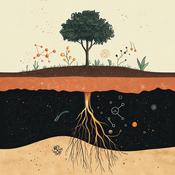 Download for free in the App Store
radio.net
Sleep timer
Save favourites
19 episodes
210 Farms, Three Big Questions: Carbon, Biodiversity & Profit
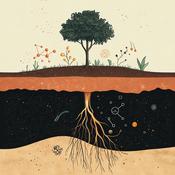
2026/10/11 | 13 mins.Can regenerative agriculture build more soil carbon, support greater biodiversity, and still make financial sense for farmers? Or is the relationship between healthy soils and profitable farms more complicated than we think?
Welcome to Season 3 of Deep Dive Into Soil Science, presented by Soil Health Exchange!
In our season premiere, we explore a fascinating 2026 study involving 210 farms across the United States and Canada, examining the connections between regenerative farming practices, soil carbon storage, biodiversity, crop yields, and farm economics.
The findings are promising, but they also raise some important questions. More regenerative practices were associated with greater soil carbon and biological activity, yet farms following similar practices often experienced remarkably different outcomes. And when it comes to yield and profitability, the story becomes even more interesting.
What does this mean for farmers? Are more regenerative practices always better? Can improved soil health translate into better financial returns? And how do soil type, climate, and management decisions shape the results?
Join us as we dig beneath the headlines, explore what the data actually reveal, and discuss how scientific evidence can inform practical decisions on the farm.
Because building healthier soils isn't just about adopting more practices. It's about understanding what works, where, and why.
Read the full research article:
https://soilhealthexchange.com/blog/regenerative-agriculture-carbon-biodiversity-profit-210-farms
Deep Dive Into Soil Science is presented by Soil Health Exchange, connecting scientific research with real-world farming decisions.
Where science meets the soil.What an ACE Protein Test Actually Tells You (and What It Doesn't)?
2026/05/13 | 17 mins.In this episode, we unpack what the ACE protein test actually tells us about soil nitrogen — and what it does not. Unlike nitrate or ammonium tests, which capture only a short-term snapshot of mineral nitrogen, the ACE protein test estimates a larger pool of organically bound nitrogen that may support biological nitrogen supply over time.
We discuss where the test came from, why it should no longer be described simply as a “glomalin” or fungal biomarker, and how its value depends on regional context, soil texture, management history, and companion indicators such as soil organic carbon, respiration, POXC, and potentially mineralizable nitrogen.
The key takeaway: ACE protein is not a stand-alone fertilizer recommendation tool. But when tracked over time, especially under cover cropping, reduced tillage, manure use, and diversified rotations, it can help reveal whether a field’s organic nitrogen reservoir is building, declining, or constrained. Read carefully, it helps answer a question nitrate tests alone cannot: how much nitrogen does your soil have to give?
Read the article: ACE ProteinCover Crop Economics: Costs, Returns, and Break-Even Analysis
2026/04/13 | 25 mins.Cover Crop Economics: Costs, Returns, and Break-Even AnalysisPLFA Analysis: What Soil Biology Testing Can and Cannot Tell You
2026/04/08 | 22 mins.Every month, farmers and agronomists spend $55–85 per sample on PLFA soil biology tests — and then struggle to know what the numbers actually mean.
In this episode, Dr. Saurav Das breaks down phospholipid fatty acid analysis: what it measures, why it's the most reproducible method for quantifying living microbial biomass in soil, and — crucially — where the science still falls short.
You'll learn:
• Why no scientifically validated thresholds exist for "good" or "bad" PLFA values — and what that means for your decision-making
• What the fungal-to-bacterial ratio actually tells you (and what it doesn't)
• How cover cropping increases total microbial biomass by 24%, no-till by 37%, and organic amendments by 59% — according to meta-analyses across 60–80 studies
• Why sample handling errors (a soil sample sitting in a truck cab) can shift your fungal markers by 40%
• The most honest current guidance: use PLFA as a trajectory tool, not a diagnostic one
Based on the peer-reviewed research brief published on Soil Health Exchange.
Full article with data tables, management decision charts, and references:
soilhealthexchange.com/blog/plfa-analysis-soil-biology-testing
Soil Health Exchange connects farmers and agronomists with evidence-based soil science. New episodes follow published field answers and research briefs.
#SoilHealth #SoilBiology #PLFA #RegenerativeAgriculture #Agronomy #SoilScience #CoverCrops #NoTillThe Soil Health Cycle: Why Adoption Stalls (and How to Fix It)
2026/01/16 | 14 mins.Soil health adoption doesn’t fail because farmers “don’t care”—it fails because the evidence chain is often incomplete. In this episode, we unpack the Soil Health Cycle (SHC): a feedback framework that connects people and motivations → management practices → measurable soil health indicators → ecosystem services → economic outcomes, then loops back to improve decisions over time.
Based on a systematic review of studies (2000–2022), a major gap shows up repeatedly: most research measures practices and soil indicators, but doesn’t simultaneously link biological indicators to profitability and productivity outcomes. That missing connection weakens incentives, slows adoption, and limits policy effectiveness.
In this episode, you’ll learn:
What the SHC framework is and how it functions as an iterative monitoring system
Which soil health indicators are most often measured—and what’s missing
Why “ecosystem services” (water regulation, nutrient cycling, resilience) need clearer economic translation
How better reporting and paired bio + economic metrics could accelerate conservation practice adoption
If you want soil health to scale, we need consistent reporting that ties soil function to outcomes farmers and policymakers can act on—yield stability, risk reduction, and profitability.
Reference materials:
Soil Health Cycle
More Science podcasts







Trending Science podcasts














About Deep Dive into Soil Science
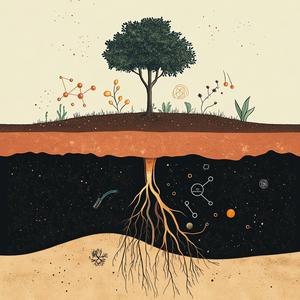
Deep Dive into Soil Science connects the dots from soil health → food quality → human health → climate outcomes. Each episode breaks down what the science actually says, what it means on farms and in policy, and what actions move the needle.
Podcast websiteListen to Deep Dive into Soil Science, Unexplainable and many other podcasts from around the world with the radio.net app
Get the free radio.net app
- Stations and podcasts to bookmark
- Stream via Wi-Fi or Bluetooth
- Supports Carplay & Android Auto
- Many other app features
Get the free radio.net app
- Stations and podcasts to bookmark
- Stream via Wi-Fi or Bluetooth
- Supports Carplay & Android Auto
- Many other app features

Deep Dive into Soil Science
Scan code,
download the app,
start listening.
download the app,
start listening.
 South Africa