

Listen to this podcast for free in the app: Download for free in the App Store
radio.net
Sleep timer
Save favourites
118 episodes
Tampopo (1985)
2026/08/26 | 1h 15 mins.Cinema Callback kicks off Criterion Week with Andy and Michael taking a deep dive into Juzo Itami’s Tampopo (1985), the joyous and wonderfully eccentric Japanese classic that transforms the conventions of the American Western into a story about the pursuit of the perfect bowl of ramen.
Through the show’s signature voice note conversation format, the hosts explore the film’s central story of a truck driver helping a widowed restaurant owner perfect her ramen recipe and rescue her struggling business. Dubbed the definitive “Noodle Western,” Tampopo takes the familiar figure of the wandering gunslinger and replaces shootouts with cooking, mentorship, and an obsessive pursuit of mastering a craft.
Across their voice note exchanges, Andy and Michael discuss the film’s extraordinary structure, with its central narrative repeatedly interrupted by surreal, funny, erotic, and sometimes deeply moving food obsessed vignettes. From sensual encounters built entirely around eating to the unforgettable sequence involving a dying mother preparing one final meal for her family, food becomes a gateway into virtually every aspect of human existence.
The conversation explores the film’s celebration of master craftsmanship and its almost magical realist view of everyday life, drawing comparisons with films such as Amélie and The Fisher King. They discuss the performances of Tsutomu Yamazaki and a young Ken Watanabe, Itami’s relatively late arrival as a filmmaker, and the remarkable life and career that followed, including his confrontation with the Yakuza and the tragic circumstances surrounding his death.
Above all, Andy and Michael explore why Tampopo feels so incredibly comforting and uplifting. Beneath all the eccentricity is a film about people helping one another become better at something they love, and about the sensory pleasures, rituals, and connections that make ordinary life worth celebrating.
Whether you are discovering Tampopo for the first time or already consider it one of cinema’s great food films, join us for the opening of Criterion Week and a deep dive into a funny, strange, sensual, and profoundly life affirming celebration of cooking, craftsmanship, and the human condition.
Enjoying the conversation?
Support Cinema Callback on Patreon for bonus content, exclusive extras, and to help us continue making in depth film discussions through our unique voice note format.
Patreon: https://www.patreon.com/c/CinemaCallbackFull Alert (1997)
2026/08/19 | 47 mins.In this episode of Cinema Callback, Andy and Michael take a deep dive into Ringo Lam’s Full Alert (1997), a forgotten gem of Hong Kong crime cinema that offers a grounded, hardboiled alternative to the more heightened action films of its era. Through the show’s signature voice note conversation format, the hosts respond to each other’s ideas over time, exploring why a film often overshadowed by the work of filmmakers like John Woo deserves to be rediscovered.
Across a series of voice note exchanges, they discuss the unusual weight Full Alert gives to violence and death. Rather than treating killing as disposable action spectacle, the film allows its consequences to linger, with both its detective and antagonist displaying something resembling psychological trauma as the story progresses. The result is a cops and criminals story populated by fallible people who may be good at their jobs but are completely unprepared for the exceptional circumstances they find themselves facing.
The conversation also explores Ringo Lam’s commitment to grounded action filmmaking and the extraordinary practical spectacle that comes with it. From chaotic car chases through the streets of Hong Kong to breathtaking motorcycle sequences, the film’s lack of reliance on CGI gives its action a physical danger and unpredictability that remains astonishing decades later.
Andy and Michael also dig into the film’s unexpectedly sinister atmosphere, including an intense score that at times feels closer to a 1990s horror movie like Scream than a conventional crime thriller. Comparisons are drawn with American films such as Heat and Seven, while the hosts consider how Full Alert develops its own distinctive combination of procedural realism, moral complexity, and almost horror-like tension.
Finally, they examine the significance of the film arriving in 1997, just months before the handover of Hong Kong, and how its images of the city inadvertently capture a place on the verge of profound historical change.
Whether you are already a fan of Hong Kong cinema or simply looking for an overlooked, gritty crime thriller, this episode explores why Full Alert is a masterclass in practical filmmaking, visual storytelling, and giving violence consequences that actually matter.
Enjoying the conversation?
Support Cinema Callback on Patreon for bonus content, exclusive extras, and to help us continue making in depth film discussions through our unique voice note format.
Patreon: https://www.patreon.com/c/CinemaCallbackThe Phantom of the Opera (1925)
2026/08/12 | 1h 16 mins.In this special Spooktober finale of Cinema Callback, Andy and Michael take a deep dive into The Phantom of the Opera (1925), the legendary silent horror film starring Lon Chaney in one of cinema's most iconic performances. Through the show's signature voice note conversation format, the hosts come at the film from very different perspectives, exploring what it means to experience a century old piece of cinema as both entertainment and cinematic history.
Michael champions the film as a visceral spectacle, particularly the striking colour sequences preserved in later versions, comparing the sheer visual experience to something as immediate as Mad Max: Fury Road. Andy has a more challenging relationship with the film, describing the viewing as something closer to an "academic experience" and questioning how easily a modern audience can connect with the rhythms and conventions of silent cinema.
Across their voice note exchanges, they explore Lon Chaney's legendary status as the "Man of a Thousand Faces", his extraordinary physical performance as the Phantom, and the film's inventive visual storytelling. They discuss everything from its use of onscreen letters and silent era techniques to the influence of German Expressionism and the surprisingly brutal, mob driven finale.
The conversation also looks at the enormous shadow The Phantom of the Opera has cast over popular culture, finding unexpected connections between its imagery and everything from Batman to modern RPGs, while asking how much of the visual language we now associate with horror can be traced back to films like this.
For the final stop of Spooktober, Andy and Michael explore whether The Phantom of the Opera remains a genuinely thrilling piece of horror cinema 100 years later, a fascinating historical artefact, or somehow both at once.
Enjoying the conversation?
Support Cinema Callback on Patreon for bonus content, exclusive extras, and to help us continue making in depth film discussions through our unique voice note format.
Patreon: https://www.patreon.com/c/CinemaCallbackIn a Violent Nature (2024)
2026/08/05 | 1h 32 mins.In this episode of Cinema Callback, Andy and Michael take a deep dive into In a Violent Nature (2024), Chris Nash's striking feature debut that reimagines the slasher film by placing the audience alongside the killer rather than his victims. Through the show's signature voice note conversation format, the hosts respond to each other's ideas over time, exploring how the film challenges decades of slasher convention through its patient, observational approach to horror.
Across a series of voice note exchanges, they examine the film's distinctive "slow scare" philosophy, discussing how its long, meditative takes of the killer moving through the wilderness create an atmosphere of quiet inevitability rather than conventional suspense. They explore the influence of Gus Van Sant's minimalist filmmaking, the effectiveness of the film's 4:3 aspect ratio, and how its methodical pacing rejects the familiar "teleporting killer" logic of traditional slashers in favour of something far more grounded and predatory.
The conversation also delves into the film's astonishing practical gore effects, its divisive critical and audience reception, and the bold decision to shift perspective during its controversial final act. They debate whether this unexpected change strengthens or undermines the film's central experiment, before looking ahead to the announced sequel and discussing how this humble yet ambitious horror film breathes new life into one of cinema's most familiar genres.
Whether you see In a Violent Nature as an art house meditation disguised as a slasher or one of the most inventive horror films of recent years, this episode explores why Chris Nash's debut has become one of the genre's most fascinating and hotly debated modern entries.
Enjoying the conversation?
Support Cinema Callback on Patreon for bonus content, exclusive extras, and help us continue making in-depth film discussions through our unique voice note format.
Patreon: https://www.patreon.com/c/CinemaCallbackAudition (1999)
2026/07/29 | 1h 19 mins.Support Cinema Callback on Patreon for bonus content, exclusive extras, and help us continue making in-depth film discussions through our unique voice note format.
Patreon: https://www.patreon.com/c/CinemaCallback
In this episode of Cinema Callback, Andy and Michael revisit Audition (1999), Takashi Miike's landmark psychological horror that famously transforms from a quiet romantic melodrama into one of the most shocking and unsettling films ever made. Through the show's signature voice note conversation format, the hosts respond to each other's ideas over time, exploring how Audition continually reframes both its characters and its audience.
Across a series of voice note exchanges, they examine the film's morally ambiguous premise, questioning the ethics of the fabricated audition used to find a new wife and how Miike uses it to interrogate the male gaze, male entitlement, and the unsettling possibility that the film's seemingly sympathetic protagonist is far more complicated than he first appears. They discuss how Audition quietly exposes the assumptions and fantasies that underpin its central relationship long before the horror emerges.
The conversation also explores the film's famously ambiguous narrative structure, debating the purpose of its dreamlike and hallucinatory sequences, and whether they represent the protagonist's unresolved grief and anxieties or simply heighten the terror by momentarily blurring the boundaries between reality and nightmare. Finally, they dissect the infamous "kiri, kiri, kiri" finale, examining its extraordinary technical execution, its uncompromising brutality, and whether its graphic violence is essential to the film's emotional and thematic impact.
Whether you see Audition as a devastating psychological horror, a critique of gender and power, or one of the defining works of Japanese cinema, this episode explores why Takashi Miike's masterpiece continues to provoke, disturb, and fascinate audiences more than two decades after its release.
More Film Reviews podcasts
 Bad Movies Rule!Comedy, Film Reviews, TV & Film
 Pop Culture Happy HourArts, Books, Entertainment News, Film Reviews, Music, Music Commentary, News, TV & Film, TV Reviews
 Blank Check with Griffin & DavidComedy, Film Reviews, Society & Culture, TV & Film
 The Empire Film PodcastFilm Reviews, TV & Film
 Redshirt Cinema ClubFiction, Film History, Film Reviews, Science Fiction, TV & Film
 Kermode & Mayo’s TakeFilm Reviews, TV & Film
- Cinema CallbackFilm Reviews, TV & Film
Trending Film Reviews podcasts
 Critical DarlingsFilm Reviews, Society & Culture, TV & Film
 Horror SandboxFilm Reviews, TV & Film
 Khandaan- A Bollywood PodcastEntertainment News, Film Reviews, News, TV & Film
 The Horror VirginComedy, Film Reviews, Improv, TV & Film
 FilmspottingFilm Reviews, TV & Film
- The Empire Film PodcastFilm Reviews, TV & Film
- Bad Movies Rule!Comedy, Film Reviews, TV & Film
 Scream!Comedy, Film Reviews, TV & Film
- Pop Culture Happy HourArts, Books, Entertainment News, Film Reviews, Music, Music Commentary, News, TV & Film, TV Reviews
 You Are GoodFilm History, Film Reviews, Relationships, Society & Culture, TV & Film
- Redshirt Cinema ClubFiction, Film History, Film Reviews, Science Fiction, TV & Film
About Cinema Callback
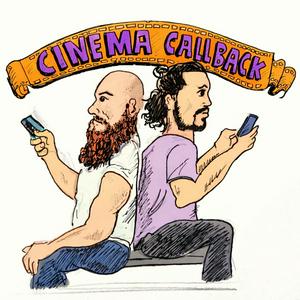
Cinema Callback is a voicemail-based film podcast hosted by Andy and Michael, two lifelong movie lovers from Ireland . Each week they exchange voice messages dissecting cult classics, hidden gems, and new releases. From horror to noir, indie to blockbusters, it’s an honest, playful take on cinema’s best. New episodes weekly.
Podcast websiteListen to Cinema Callback, Bad Movies Rule! and many other podcasts from around the world with the radio.net app
Get the free radio.net app
- Stations and podcasts to bookmark
- Stream via Wi-Fi or Bluetooth
- Supports Carplay & Android Auto
- Many other app features
Get the free radio.net app
- Stations and podcasts to bookmark
- Stream via Wi-Fi or Bluetooth
- Supports Carplay & Android Auto
- Many other app features
Cinema Callback
Scan code,
download the app,
start listening.
download the app,
start listening.
 South Africa