
Listen to this podcast for free in the app: Download for free in the App Store
radio.net
Sleep timer
Save favourites
107 episodes
#107 Catching Disease Five Years Early with Caroline Vissers: Walking Away From Faculty, Why Investors Avoid Diagnostics and Rethinking When We Diagnose
2026/09/29 | 26 mins.Caroline Vissers, co-founder of Immunectra and a former UCSF faculty member, who walked away from a lab of her own to build a company. Working alongside scientific co-founders Joe DeRisi and Michael Wilson, Caroline is developing blood-based tests capable of detecting autoimmune disease long before a patient ever shows symptoms.
In this episode, Caroline shares why she gave up a faculty position most scientists spend a career chasing, how she prepared for the jump with a venture capital course and consulting work before committing and why the entrepreneurial path was always the real destination. She also breaks down epitranscriptomics in plain terms and explains the unusual path that led from RNA methylation research into autoimmunity.
The core of the conversation is early detection. Caroline explains the prodromal phase, why MS patients often wait years for a diagnosis while irreversible neurological damage is already happening and what it means to detect disease up to five years before onset. We get into the uncomfortable reality that healthcare reimbursement is built for reactive medicine rather than prediction, how employer-based insurance may open the door and why she is upfront that policy will have to catch up with the science.
We also cover the access to biobanked military samples that made the discovery possible and now serves as a competitive moat, why so many life science investors avoid diagnostics entirely and Caroline's advice for anyone weighing up a leap into founding a company.
Timestamps
[00:02:00] Why She Gave Up a Faculty Position Most Scientists Chase
[00:03:32] Learning to Be a Founder Before Making the Leap
[00:05:38] Epitranscriptomics Explained in Plain Terms
[00:09:07] The Prodromal Phase and Detecting MS Before Symptoms
[00:11:31] Why Reimbursement Is Built for Reactive Medicine
[00:13:45] What Most People Do Not Understand About Living With MS
[00:15:20] Could This Replace the Spinal Tap and Repeat MRIs?
[00:17:39] The Operational Chaos Nobody Warns First-Time Founders About
[00:19:48] Why So Many Life Science Investors Will Not Touch Diagnostics
[00:22:30] Why Nobody Has Done This Before: Sample Access as a Moat
Connect with Sandy - https://www.linkedin.com/in/caroline-vissers-b7431285/
Learn more about Immunecetra - https://qb3.org/invoke-bio-immunectra-win-100k-qb3-mentoring-awards-for-precision-cancer-vaccines-ms-diagnostic/
https://qb3.org/im-all-in-immunectras-founder-left-her-faculty-position-to-form-groundbreaking-company/
Get in touch with Karandeep Badwal - https://www.linkedin.com/in/karandeepbadwal/
Follow Karandeep on YouTube - https://www.youtube.com/@KarandeepBadwal
Medical device training courses delivered by Karandeep through Bywater - https://www.bywater.co.uk/#106 What Notified Bodies Actually Look For with Sandy Wright: Why SaMD Submissions Fail, the EU AI Act and Getting to Market Faster
2026/08/31 | 25 mins.Sandy Wright, Head of Devices at Scarlet, the first notified body built specifically around software as a medical device. A former doctor who moved from clinical practice into digital health. Sandy now sits on the assessment side of the table, reviewing the very submissions most manufacturers dread putting together.
In this episode, we start with the question that trips up so many companies. What actually turns a piece of software into a medical device and why is the wellness boundary still so blurry that entire businesses are straddling the divide without realising it. Sandy shares some of the more unusual examples out there, including AI ambient scribes and augmented reality tools that let surgeons revisit patient scans mid-operation.
We then go inside Scarlet itself. Sandy explains why they see themselves as a technology company first and a notified body second, how a combination of expertise, redesigned process and their own internal tooling means customers are not sitting at the back of a queue for months and what genuinely drives faster conformity assessment.
The most valuable part for anyone in this space is Sandy's breakdown of where nonconformities actually come from. Clinical evaluation, post-market clinical follow up treated as an afterthought, incomplete software requirements and risk analyses that are too narrow. We also cover the EU AI Act and how it may or may not intersect with MDR, what makes a genuinely good PCCP and Sandy's parting advice on the underrated power of narrative in a regulatory submission.
Timestamps
[00:01:00] What Actually Turns Software Into a Medical Device
[00:03:39] AI Scribes and AR Headsets: SaMD You Might Not Expect
[00:06:10] Why Scarlet Sees Itself as a Technology Company First
[00:08:43] How Scarlet Cut Assessment Timelines Without Cutting Corners
[00:12:12] Clinical Evaluation: The Most Common Source of Findings
[00:13:18] Why Post-Market Clinical Follow Up Is Treated as an Afterthought
[00:16:20] Risk Management and Why a Narrow Lens Causes Problems
[00:16:55] The EU AI Act and How It May Intersect With MDR
[00:19:56] From Foundation Doctor to Babylon Health and Beyond
[00:22:42] What Separates a Good PCCP From a Box-Ticking One
Connect with Sandy - https://www.linkedin.com/in/wrightsandy/
Learn more about Scarlet - https://www.scarlet.cc/
Get in touch with Karandeep Badwal - https://www.linkedin.com/in/karandeepbadwal/
Follow Karandeep on YouTube - https://www.youtube.com/@KarandeepBadwal
Medical device training courses delivered by Karandeep through Bywater - https://www.bywater.co.uk/#105 Inside the Transplant Industry with Tom Daulton: The Device Keeping Donated Organs Alive, Why the US Dominates Transplants and Building in a Niche Market
2026/08/17 | 27 mins.Tom Daulton, CEO of Organ Recovery Systems, who has spent over 40 years in interventional medicine and building healthcare companies. Twelve months ago he knew very little about the transplant world. Today he runs one of the most fascinating businesses in it.
In this episode, Tom explains what makes transplant unlike anything else in medicine, a field where sadly a patient has to die for another to live and where there is no pharmaceutical fallback the way dialysis can bridge a failing kidney. He breaks down why over 80% of transplants happen in the US, why the real bottleneck is donor supply rather than surgical capacity and how organs actually move across the country against a ticking clock.
We get into the technology at the heart of the business, the egg-shaped hypothermic perfusion device roughly the size of a carry-on that keeps a donated organ stable and monitored for over 24 hours, GPS telemetry and all, a world away from the cardboard box of ice that used to be standard. Tom walks us through what an organ procurement facility looks like from the inside, why each organ needs its own dedicated device and what is coming next after kidney and liver.
Finally, Tom shares hard-won advice for anyone building in a small niche market with real emotional weight, why you have to hire the experts, why falling in love with your product is a trap and why every niche business has to prove it is safer, faster, cheaper or better for outcomes. He closes on the tagline he lives by: be hungry and humble.
Timestamps
[00:01:35] From 40 Years in Interventional Medicine to the Transplant World
[00:03:53] The Business Where a Patient Has to Die for Another to Live
[00:05:11] Why Over 80% of Transplants Happen in the US
[00:07:38] Not Enough Facilities or Not Enough Donors?
[00:09:16] Inside the Egg: What the Perfusion Device Actually Does
[00:13:28] How Organs Were Moved Before: A Cardboard Box of Ice
[00:15:10] How Much Time the Machine Really Buys
[00:17:20] Inside an Organ Procurement Facility
[00:22:04] Why Every Organ Needs Its Own Device
[00:29:11] Final Advice: Be Hungry and Humble
Connect with Tom - https://www.linkedin.com/in/tom-daulton-7230367/
Learn more about Organ Recovery Systems - https://www.organ-recovery.com/
Get in touch with Karandeep Badwal - https://www.linkedin.com/in/karandeepbadwal/
Follow Karandeep on YouTube - https://www.youtube.com/@KarandeepBadwal
Medical device training courses delivered by Karandeep through Bywater - https://www.bywater.co.uk/#104 From Investor to Inventor with Joanna Nathan: Rethinking Early Stage Lung Cancer Surgery, Raising Capital and the Changing Face of the Disease
2026/08/03 | 24 mins.Joanna Nathan, CEO and co-founder of Prana Surgical, adjunct professor at Rice University and a former MedTech investor who spent years at the J&J MedTech Center for Device Innovation before crossing over into building herself. Her company recently secured FDA clearance for the Prana System, a tissue-sparing platform rethinking how early stage lung cancer is diagnosed and treated.
In this episode, Joanna shares the deeply personal story behind her move from investing back into operating, having lost her four year old son in 2021 and wanting proximity to patient impact rather than evaluating innovation from the sidelines. It is an honest and moving conversation about what actually drives someone to take on a decade-long mission.
We get into what she learned watching hundreds of pitches from the investor seat, why a no is very often about portfolio construction and timing rather than the quality of your idea, and why a fundraising pitch is a vision document backed by evidence rather than a journal article. Joanna then breaks down the problem Prana is solving, why removing large portions of lung for a tiny early stage nodule is no longer justifiable and how the system is right-sized for the level of risk these smaller lesions present.
We also explore the changing face of lung cancer, the rise of never smokers now approaching one in three patients, why the disease is getting younger and more female, the role of mobile screening in rural areas and where AI genuinely helps rather than replaces clinical judgement. Joanna closes with hard-won advice for anyone thinking about founding a company and why community is what carries you through.
Timestamps
[00:01:38] From Research to Investing to Building: The Path Back to Operating
[00:03:33] Why a No From an Investor Is Rarely About Your Idea
[00:05:29] Why a Pitch Is a Vision Document Not a Journal Article
[00:07:16] The Problem With Early Stage Lung Cancer Surgery Today
[00:09:22] The Rise of Never Smokers and a Disease That Is Changing Fast
[00:11:03] Why Women Under 50 Now Face Higher Lung Cancer Rates
[00:13:18] Getting Creative on Access: Mobile CT Screening in Rural Areas
[00:17:21] AI in MedTech: Assisting Clinical Judgement Not Replacing It
[00:19:22] How Houston Became an Unlikely MedTech Powerhouse
[00:24:06] Who Should Not Become a Founder and the Decade-Long Question
Connect with Joanna - linkedin.com/in/joannacnathan/
Learn more about Prana Surgical - https://www.pranasurgical.com/
Get in touch with Karandeep Badwal - https://www.linkedin.com/in/karandeepbadwal/
Follow Karandeep on YouTube - https://www.youtube.com/@KarandeepBadwal
Medical device training courses delivered by Karandeep through Bywater - https://www.bywater.co.uk/#103 Why Faster Is Not Always Better with Basant Bajpai: EU MDR vs FDA, the GCC Regulatory Landscape and Where Innovators Get Stuck
2026/07/20 | 26 mins.Dr. Basant Bajpai CEO of Compliance MedQRA, a UAE-based consulting company specializing in Quality Assurance, Regulatory Affairs, AI governance and compliance for medical devices, SaMD, AI/ML health technologies and digital health solutions. He holds a PhD in Neuroscience focused on brain monitoring and neurotechnology and has more than 12 years of international experience supporting MedTech and digital health companies across Europe, the Middle East and the United States.
He explains why regulatory and quality is still one of the most misunderstood functions in MedTech and why so many innovators treat it as a documentation exercise until it becomes an expensive problem at the worst possible moment. We get into the question every founder asks, how long will this take and what will it cost and why there is genuinely no straight answer without first building a proper regulatory strategy.
We also tackle the growing trend of companies choosing the US over EU MDR simply because it looks faster. Basant makes the case that regulatory approval alone does not guarantee commercial entry, why reimbursement codes should shape your market choice more than approval timelines and why he now finds EU MDR more convenient than many people expect. He also shares a contrarian view on device classification and why staying in the lowest risk class is not always the smart play.
Finally, we explore the GCC regulatory landscape, which Basant argues is not less regulated but differently regulated, with data compliance requirements he found tougher than GDPR or HIPAA. He closes with a clear message on AI in healthcare and why he does not believe regulators will ever allow a clinician to be replaced.
Timestamps
[00:01:23] From Biomedical Engineering to a First Audit That Changed Everything
[00:03:33] Why Everyone Thinks Regulatory Is Just a Documentation Department
[00:06:07] How Long Will It Take and What Will It Cost: The Impossible Question
[00:09:35] EU MDR vs FDA: Why Reimbursement Should Drive the Decision
[00:12:19] Regulatory Approval Does Not Guarantee Commercial Success
[00:14:36] Why Staying in the Lowest Risk Class Can Backfire
[00:16:00] The GCC: Not Less Regulated, Just Differently Regulated
[00:18:24] Why Data Compliance in the Gulf Is Tougher Than GDPR
[00:23:30] Who Should Not Pursue a Career in Quality and Regulatory
[00:29:17] Final Advice: AI Will Transform Healthcare but Not Replace Clinicians
Connect with Basant - https://www.linkedin.com/in/basant-bajpai-phd-63565961
Learn more about Complaince MedQRA - https://www.compliancemedqra.net/
Get in touch with Karandeep Badwal - https://www.linkedin.com/in/karandeepbadwal/
Follow Karandeep on YouTube - https://www.youtube.com/@KarandeepBadwal
Medical device training courses delivered by Karandeep through Bywater - https://www.bywater.co.uk/
More Life Sciences podcasts





Trending Life Sciences podcasts




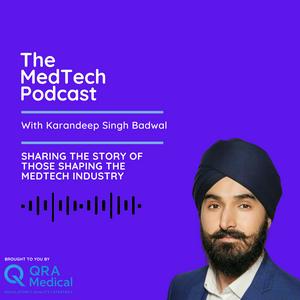
About The MedTech Podcast
The MedTech Podcast shares the journey behind the path of the people shaping the MedTech industry and its future. Join me as I connect with industry leaders, thought providers and innovators.
Hosted by Karandeep Singh Badwal, Karandeep is a Quality & Regulatory Consultant specialising in the MedTech Industry. If you have any ideas for future episodes or would like to be on the podcast then feel free to connect with me via the links below
Follow Karandeep on LinkedIn: https://www.linkedin.com/in/karandeepbadwal/
Follow Karandeep on YouTube: https://www.youtube.com/c/KarandeepBadwal/
Podcast websiteListen to The MedTech Podcast, Naked Neuroscience, from the Naked Scientists and many other podcasts from around the world with the radio.net app
Get the free radio.net app
- Stations and podcasts to bookmark
- Stream via Wi-Fi or Bluetooth
- Supports Carplay & Android Auto
- Many other app features
Get the free radio.net app
- Stations and podcasts to bookmark
- Stream via Wi-Fi or Bluetooth
- Supports Carplay & Android Auto
- Many other app features

The MedTech Podcast
Scan code,
download the app,
start listening.
download the app,
start listening.
 South Africa

