

Listen to this podcast for free in the app: Download for free in the App Store
radio.net
Sleep timer
Save favourites
41 episodes
S4 EP7 - Should You Still Study Engineering in the Age of AI?
2026/08/29 | 28 mins.Should you still study engineering when AI can already write code, analyse data and automate parts of an engineer's job?
In this solo episode, Neil Ashton gives his view on engineering education and careers in the age of AI. His answer is yes—but the skill set is changing. Neil explains why engineering fundamentals still matter, where AI can act as an enabler, what students and early-career engineers should learn now, and why soft skills, projects and internships may become even more important.
Topics include:
- Why demand for engineers is likely to remain strong
- The engineering tasks most likely to change
- AI as an enabler for coding, CAD, CAE and automation
- Why domain knowledge is still essential for checking AI's work
- What practical AI fluency means beyond using a chat interface
- Advice for undergraduate, postgraduate and PhD students
- How projects, internships and soft skills can help you stand out
Podcast archive: https://neilashton.co.uk/podcasts/
Chapters:
00:00 Podcast intro
00:39 The career question in the age of AI
03:20 Why engineering demand is still growing
04:43 Which engineering tasks AI will change
05:21 AI as an engineering enabler
09:18 Why fundamentals and domain expertise still matter
11:59 AI fluency and the hiring market
16:41 Advice for students and researchers
20:05 What engineers should study now
22:11 Standing out: soft skills, projects and internships
25:41 Is engineering still worth it?
Resource mentioned:
- World Economic Forum, Future of Jobs Report 2025 — Skills outlook: https://www.weforum.org/publications/the-future-of-jobs-report-2025/in-full/3-skills-outlook/
Please note that this episode expresses my personal opinion and does not represent the views of NVIDIA.S4 EP6 - Daniel Mira on Hydrogen Combustion Modelling and Future Propulsion
2026/08/11 | 1h 24 mins.Hydrogen combustion, high-fidelity CFD and the future of aircraft propulsion are the focus of this conversation with Dr. Daniel Mira, Head of the Propulsion Technologies Group at the Barcelona Supercomputing Center. Neil and Dani discuss why reacting flows are so difficult to simulate, how hydrogen changes combustion and aircraft design, the limits of RANS, LES and DNS, GPU-native solvers, coding agents and AI surrogate models.
Full episode, corrected transcript and resources:
https://neilashton.co.uk/podcasts/s4-e6-daniel-mira-on-hydrogen-combustion-modelling-and-future-propulsion/
Topics
Why reacting flows are so computationally difficult
Hydrogen versus hydrocarbon combustion
When hydrogen could reach commercial aviation
How engines and aircraft must be redesigned
Industrial trust in high-fidelity combustion CFD
RANS, LES and DNS for reacting flows
Chemistry, load balancing and computational cost
Wall modelling in combustion LES
GPU acceleration and solver redesign
Coding agents for scientific software
AI surrogate models and digital engineering workflows
Selected resources
Daniel Mira and the Propulsion Technologies Group
https://ptg.bsc.es/?p=44
Propulsion Technologies Group — research lines
https://ptg.bsc.es/research-lines/
BSC — Combustion research
https://www.bsc.es/research-development/research-areas/engineering-simulations/combustion
Center of Excellence in Combustion (CoEC)
https://coec-project.eu/
High-fidelity simulations of the mixing and combustion of a technically premixed hydrogen flame
https://upcommons.upc.edu/entities/publication/08a27c10-cb13-4357-a3ab-8e9ec1d706cc
Chapters
00:00 Podcast intro
00:39 Introducing Daniel Mira
03:00 Conversation begins
04:55 Why combustion CFD is so hard
10:23 Daniel’s path into hydrogen and jet-engine combustion
12:48 Hydrogen versus hydrocarbon combustion
17:58 Industrial adoption of hydrogen
20:54 Gas turbines, aviation and fuel infrastructure
25:35 How jet engines must change
30:43 Redesigning the whole aircraft
34:46 What will trigger commercial adoption?
37:27 Why aerospace projects take a decade
42:14 RANS, LES and DNS for reacting flows
44:31 Replacing expensive tests with high-fidelity CFD
46:01 The biggest accuracy gaps in combustion LES
49:26 Where the computational cost goes
52:06 Chemistry, species and source-term bottlenecks
55:35 Wall modelling in combustion LES
59:49 GPUs, algorithms and solver redesign
01:08:52 Can coding agents accelerate combustion CFD?
01:12:27 AI surrogate models for combustion
01:24:20 Closing thoughtsS4 EP5 - Prof. Nils Thuerey on Differentiable Physics and Foundation Models
2026/07/23 | 1h 14 mins.Differentiable physics, neural emulators and foundation models for PDEs are the focus of this conversation with Professor Nils Thuerey, head of the Physics-based Simulation group at TUM. Neil and Nils discuss PhiFlow, PICT, Tadpole, scalable 3D transformers, online synthetic data, open datasets, world models and agents that call physics simulators.
Full episode, corrected transcript and resources:
https://neilashton.co.uk/podcasts/s4-e5-prof-nils-thuerey-on-differentiable-physics-and-foundation-models/
Topics
Differentiable physics and physics-based deep learning
PhiFlow and differentiable simulation across ML frameworks
When neural emulators can outperform their training data
Foundation models for PDEs and synthetic online training
Scalable 3D transformers and high-resolution simulations
LES, temporal data and correlated CFD datasets
Open-source tools, startups and physics-aware world models
AI agents that call physics simulators
Papers
Neural Emulator Superiority: When Machine Learning for PDEs Surpasses its Training Data
https://arxiv.org/abs/2510.23111
Tadpole: Autoencoders as Foundation Models for 3D PDEs with Online Learning
https://arxiv.org/abs/2605.15284
P3D: Scalable Neural Surrogates for High-Resolution 3D Physics Simulations with Global Context
https://arxiv.org/abs/2509.10186
PICT — A Differentiable, GPU-Accelerated Multi-Block PISO Solver for Simulation-Coupled Learning Tasks in Fluid Dynamics
https://arxiv.org/abs/2505.16992
PhiFlow: Differentiable Simulations for PyTorch, TensorFlow and JAX
https://proceedings.mlr.press/v235/holl24a.html
Physics-based Deep Learning
https://arxiv.org/abs/2109.05237
Learning to Control PDEs with Differentiable Physics
https://arxiv.org/abs/2001.07457
Solver-in-the-Loop: Learning from Differentiable Physics to Interact with Iterative PDE-Solvers
https://arxiv.org/abs/2007.00016
tempoGAN: A Temporally Coherent, Volumetric GAN for Super-resolution Fluid Flow
https://arxiv.org/abs/1801.09710
Deep Learning Methods for Reynolds-Averaged Navier-Stokes Simulations of Airfoil Flows
https://arxiv.org/abs/1810.08217
WeatherBench: A Benchmark Dataset for Data-Driven Weather Forecasting
https://arxiv.org/abs/2002.00469
SuperWing: A Comprehensive Transonic Wing Dataset for Data-Driven Aerodynamic Design
https://arxiv.org/abs/2512.14397
Links
Nils Thuerey and the Physics-based Simulation group
https://ge.in.tum.de/about/n-thuerey/
Chapters
00:00 Podcast intro
00:39 Introducing Prof. Nils Thuerey
04:13 Conversation begins
05:13 From Computational Numerics to Graphics and Visual Effects
07:17 Physics-Based Deep Learning Before ChatGPT
10:01 CNNs, Graphics and the Move into Engineering Applications
12:37 PhiFlow and Differentiable Physics
14:13 Can Neural Emulators Surpass Their Training Data?
18:00 The Promise and Limits of Foundation Models for PDEs
20:43 Tadpole and Synthetic Online Pre-Training
24:07 From Canonical PDEs to Navier-Stokes and Industrial CFD
26:35 What Do Foundation Models Actually Learn?
28:36 PDE Pre-Training vs. Millions of CFD Simulations
33:08 Scaling 3D Transformers and Training Infrastructure
35:58 Generating and Training on Data in Real Time
38:00 LES, Temporal Data and Turbulence
42:15 Overfitting and Correlated Simulation Data
44:27 Bringing Differentiable Solvers Back into the Loop
45:31 WeatherBench, APEBench and the Value of Benchmarks
47:09 SuperWing, Open Datasets and Commercial Data
51:31 Open Source, Commercial Models and a Technical Oscar
56:17 Academia, Startups and Industry
01:00:55 What Will Change Over the Next Five Years?
01:02:07 World Models and the Need for Physics
01:08:19 Agents, Tool Use and Calling Physics Simulators
01:11:22 Career Advice for AI and Simulation
01:13:54 Closing ThoughtsS4 EP4 - Prof. Paola Cinnella on AI for Science and Fluid Mechanics
2026/07/09 | 1h 25 mins.RANS uncertainty, data-driven turbulence modeling and AI for Science are the focus of this conversation with Professor Paola Cinnella, Professor of Fluid Mechanics at Sorbonne University and Director of SCAI. Neil and Paola discuss high-order methods, dense gases, Bayesian uncertainty, AirfRANS, surrogate modeling, scientific publishing and education in the AI era.
Full episode, corrected transcript and resources:
https://neilashton.co.uk/podcasts/s4-e4-prof-paola-cinnella-on-ai-for-science-and-fluid-mechanics/
Topics
Fluid mechanics, CFD and high-order schemes
Dense gases, real-gas effects and expansion shockwaves
Uncertainty quantification and Bayesian methods
RANS turbulence-model uncertainty
AirfRANS and CFD datasets for machine learning
Turbulence modeling vs. surrogate modeling
Scientific publishing and ML-for-CFD standards
SCAI and AI for Science
Education, ChatGPT and centaur scientists
Papers
Quantification of model uncertainty in RANS simulations: A review — Heng Xiao, Paola Cinnella
https://doi.org/10.1016/j.paerosci.2018.10.001
Discovery of Algebraic Reynolds-Stress Models Using Sparse Symbolic Regression — Martin Schmelzer, Richard P. Dwight, Paola Cinnella
https://doi.org/10.1007/s10494-019-00089-x
Bayesian estimates of parameter variability in the k-epsilon turbulence model — W.N. Edeling, P. Cinnella, R.P. Dwight, H. Bijl
https://doi.org/10.1016/j.jcp.2013.10.027
AirfRANS: High Fidelity Computational Fluid Dynamics Dataset for Approximating Reynolds-Averaged Navier-Stokes Solutions
https://arxiv.org/abs/2212.07564
Data-driven turbulence modeling — Paola Cinnella
https://arxiv.org/abs/2404.09074
Direct numerical simulations of supersonic turbulent channel flows of dense gases — Luca Sciacovelli, Paola Cinnella, Xavier Gloerfelt
https://doi.org/10.1017/jfm.2017.237
Links
Paola Cinnella named Director of SCAI
https://scai.sorbonne-universite.fr/news/paola-cinnella-new-director
SCAI
https://scai.sorbonne-universite.fr/
Paola Cinnella — HAL publications
https://cv.hal.science/paola-cinnella
Paola Cinnella — Google Scholar
https://scholar.google.com/citations?hl=fr&user=wBRA0JAAAAAJ
ERCOFTAC SIG 54 — Machine Learning for Fluid Dynamics
https://www.ercoftac.org/special_interest_groups/54-machine-learning-for-fluid-dynamics/master-of-science-internships/
Chapters
00:00 Podcast intro
00:39 Introducing Prof. Paola Cinnella
03:28 Conversation begins
03:56 How Paola Found Fluid Mechanics
07:09 Moving from Italy to France
08:37 High-Order Schemes and Compressible Flows
09:30 Building an Academic Career
12:06 Dense Gases and Uncertainty Quantification
15:16 Expansion Shockwaves and Real-Gas Effects
19:17 Returning to Paris and Academic Mobility
24:52 Academia, Passion and Persistence
27:51 Bayesian Methods and Turbulence Uncertainty
30:47 Learning Statistics Across Disciplines
33:07 LearnFluidS, AirfRANS and CFD Datasets
36:33 Skepticism and Physics in ML Turbulence Modeling
40:41 Could ML Lead to a Universal Turbulence Model?
42:59 Turbulence Models, Surrogate Models and RANS
45:03 Why LES Alone Cannot Solve Optimization
47:15 Multi-Fidelity Modeling
49:08 What Computers & Fluids Looks for in ML-for-CFD Papers
54:05 CFD Metrics vs. Machine-Learning Metrics
57:13 Overselling, Publication Pressure and Quality
01:02:22 SCAI and AI for Science
01:06:07 Cross-Disciplinary AI for Science
01:09:26 Education in the AI Era
01:12:44 Critical Thinking and AI Outputs
01:18:15 AI as a Companion, Not a Replacement
01:21:42 AlphaFold and the Future of Discovery
01:23:43 Training Centaur Scientists
01:25:11 Closing ThoughtsS4 EP3 - Prof. Ricardo Vinuesa on AI for Fluid Mechanics
2026/06/25 | 1h 5 mins.Foundation models, explainable AI and autonomous discovery in fluid mechanics are the focus of this conversation with Professor Ricardo Vinuesa, Associate Chair for Research and Associate Professor of Aerospace Engineering at the University of Michigan. Neil and Ricardo discuss latent representations, turbulence, reduced-order modeling, flow control and whether AI can discover physical mechanisms that humans might miss.
Full episode, corrected transcript and resources:
https://neilashton.co.uk/podcasts/s4-e3-prof-ricardo-vinuesa-on-ai-for-fluid-mechanics/
Topics
Can fluid mechanics have a “ChatGPT moment”?
Foundation models and latent representations for turbulent flows
Explainable AI, causality and identifying the mechanisms that matter
Why classical coherent structures may tell only part of the turbulence story
Physics-informed vs purely data-driven machine learning
Reduced-order modeling, autoencoders, transformers and nonlinear compression
Deep reinforcement learning for flow control and optimization
Agentic AI and autonomous scientific discovery in PDE-governed systems
How academia, computer science and engineering education must adapt to AI
Papers
Agentic Exploration of PDE Spaces using Latent Foundation Models for Parameterized Simulations — Abhijeet Vishwasrao et al.
https://arxiv.org/abs/2604.09584
Multi-agent LLMs and latent foundation models autonomously explore flow physics in a tandem-cylinder problem.
Enhancing computational fluid dynamics with machine learning — Ricardo Vinuesa, Steven L. Brunton
https://doi.org/10.1038/s43588-022-00264-7
A roadmap for useful ML in CFD, including faster simulations, turbulence models and reduced-order models.
Identifying regions of importance in wall-bounded turbulence through explainable deep learning — Andrés Cremades et al.
https://doi.org/10.1038/s41467-024-47954-6
Explainable AI identifies flow structures that matter for prediction and control.
β-Variational autoencoders and transformers for reduced-order modelling of fluid flows — Alberto Solera-Rico et al.
https://doi.org/10.1038/s41467-024-45578-4
Disentangled latent spaces, autoencoders and transformers support interpretable reduced-order models.
Improving turbulence control through explainable deep learning — Miguel Beneitez et al.
https://arxiv.org/abs/2504.02354
Explainable AI and deep reinforcement learning target turbulence-sustaining mechanisms.
Links
VinuesaLab
https://www.vinuesalab.com/
Ricardo Vinuesa — University of Michigan Aerospace Engineering
https://aero.engin.umich.edu/people/ricardo-vinuesa/
AI and ML for Fluid Dynamics course — Ricardo Vinuesa and Sergio Hoyas
https://www.flowthermolab.com/courses/ai-ml-for-fluids/
VinuesaLab YouTube channel
https://www.youtube.com/@VinuesaLab
AI for Fluid Mechanics, Sustainability & XAI — Ricardo Vinuesa
https://www.youtube.com/watch?v=TOfwf4ffPnU
Modelling and controlling turbulent flows through deep learning — Ricardo Vinuesa
https://www.youtube.com/watch?v=0AOY_agZ8WM
Chapters
00:00 Podcast intro
03:20 The Evolution of Foundation Models in Fluid Dynamics
10:22 Understanding Explainable AI in Fluid Mechanics
15:34 Challenges in Data Fidelity for Foundation Models
20:29 Machine Learning vs. Reduced-Order Modeling
24:22 The Shift from Turbulence Modeling to Surrogate Models
29:48 Exploring Agentic Systems for Scientific Discovery
37:21 Exploring Latent Representations in Fluid Dynamics
40:40 The Role of AI in Autonomous Discovery
41:57 Bridging Fluid Mechanics and Computer Science
45:28 Data-Driven vs. Physics-Driven Models
51:34 The Role of Academia in AI and Fluid Mechanics
56:27 Optimization and Control in Machine Learning
01:00:28 The Future of AI in Fluid Dynamics: Beyond ChatGPT
More Natural Sciences podcasts
 RadiolabDocumentary, History, Natural Sciences, Science, Society & Culture
 Students of SurgeryEducation, Natural Sciences, Science
 The Numberphile PodcastEducation, Natural Sciences, Science, Social Sciences
 Daniel and Kelly’s Extraordinary UniverseNatural Sciences, Science
 Real Ghost Stories OnlineNatural Sciences, Religion & Spirituality, Science, Spirituality
 Sasquatch ChroniclesNatural Sciences, Science, Society & Culture
 DarkHorse PodcastNatural Sciences, News, Politics, Science, Society & Culture
 Homesteading and Permaculture by Paul WheatonNatural Sciences, Science
Trending Natural Sciences podcasts
 ExtinctZooNatural Sciences, Science
 HOLOSKY PODCASTNatural Sciences, Science, True Crime
 Infectious Disease PuscastEducation, Natural Sciences, Science
- Real Ghost Stories OnlineNatural Sciences, Religion & Spirituality, Science, Spirituality
 The Grave Talks | Haunted, Paranormal & SupernaturalNatural Sciences, Personal Journals, Religion & Spirituality, Science, Society & Culture, Spirituality
 The Science ShowNatural Sciences, Science
 Paranormal MysteriesNatural Sciences, Science, Society & Culture
 BrainStuffNatural Sciences, Science, Technology
- Sasquatch ChroniclesNatural Sciences, Science, Society & Culture
 Ask a Spaceman!Astronomy, Natural Sciences, Physics, Science
- The Numberphile PodcastEducation, Natural Sciences, Science, Social Sciences
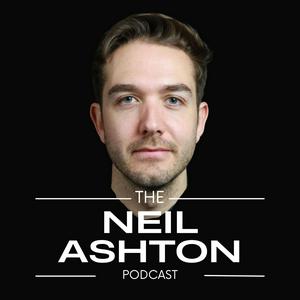
About The Neil Ashton Podcast
The Neil Ashton Podcast explores artificial intelligence, computational engineering, computational fluid dynamics, scientific machine learning, and high-performance computing. Hosted by Neil Ashton, a Distinguished Engineer at NVIDIA, it features conversations with leading researchers and engineers about technology, careers, and scientific discovery.
Podcast websiteListen to The Neil Ashton Podcast, Radiolab and many other podcasts from around the world with the radio.net app
Get the free radio.net app
- Stations and podcasts to bookmark
- Stream via Wi-Fi or Bluetooth
- Supports Carplay & Android Auto
- Many other app features
Get the free radio.net app
- Stations and podcasts to bookmark
- Stream via Wi-Fi or Bluetooth
- Supports Carplay & Android Auto
- Many other app features

The Neil Ashton Podcast
Scan code,
download the app,
start listening.
download the app,
start listening.
The Neil Ashton Podcast: Podcasts in Family
 South Africa