
Listen to this podcast for free in the app: Download for free in the App Store
radio.net
Sleep timer
Save favourites
199 episodes
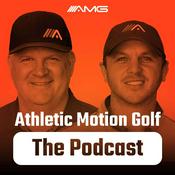
Your Clubs May Be Completely WRONG For Your Swing!
2026/10/02 | 1h 3 mins.In this today's Podcast, Mike Granato & Shaun Webb from Athletic Motion Golf are joined by Scott Anderson, president of True Spec Golf, to break down what actually matters in a club fitting. Scott opens with a wild story: a tour player with a 130 mph clubhead speed was struggling at the Honda Classic, and it turned out his 7 and 9 irons were built with ladies flex shafts, not a swing issue at all.
They cover why the golf club is often "the arrow, not the archer," how True Spec's Club Connect system lets them test any shaft in any head to isolate variables, why the head matters more than the shaft in most cases, and why golfers almost never leave with one brand top to bottom. They also dig into spin and loft (why stronger lofts have quietly hurt a lot of golfers' short game), the shift toward fairway woods over long irons and hybrids, and how a real fitting turned one junior golfer's swing speed jump into a completely different bag.
Scott also shares a story about a fitter who turned down a sale because the timing wasn't right, and how that decision paid off in the long run.
Let us know in the comments the last time you got properly fit for your clubs.
✅ Get $50 off a True Spec club fitting near you by using code AMG50 while booking at https://truespecgolf.com/get-fit/
👉 FREE: Add Instant Distance With This GO-TO "Distance Injection" DRILL: https://athleticmotiongolf.com/distance
Chapters:
00:00 Introducing Scott Anderson, president of True Spec Golf
00:36 The tour player story from the Honda Classic
01:03 Diagnosing the problem trackside
01:53 The shafts were ladies flex the whole time
02:29 Why it's often the equipment, not the swing
03:31 How often you should check your specs
04:14 Why a bad seven iron usually isn't a swing issue
04:56 How True Spec blueprints a full set
06:09 Why one person builds each set start to finish
08:01 Why tour players re-verify their own equipment
09:09 Taking one variable out of the game
10:03 What actually holds players back in their equipment
11:40 Why spin control matters more than distance
12:14 The "are these clubs too long" question
13:04 How standard club lengths have crept up over time
13:34 What actually creates spin
15:24 The moment fitting numbers finally click for a player
16:02 Getting fit at the wrong time
17:05 A fitter who said "not yet" and lost a sale
20:01 Why the wrong equipment can waste money on lessons
22:10 The tipping point on shaft weight
22:48 Why "feel" is the most unreliable feedback
24:32 Why fairway woods are replacing long irons and hybrids
29:26 Should you fix your swing first or get fit first?
33:47 When to actually replace your wedges
41:24 Why players rarely leave with one brand
46:12 The danger of copying your driver shaft into fairway woods
49:13 How often combo iron sets actually work
51:17 Why players end up with fewer than 13 clubs
#golf #golfpodcast #clubfitting #golfequipment #athleticmotiongolfWe'd Outlaw This Golf Advice On The Spot!
2026/09/25 | 21 mins.In this video Mike Granato & Shaun Webb from Athletic Motion Golf play "golf czar for a day" and go through the advice, comments, and mindsets they'd ban from golf entirely if they were in charge. That includes the idea that you can't change your golf swing (Mike has changed his five times, with video proof), the instinct to avoid counter movements like the backswing weight shift because "you're just going to have to move forward anyway," and beginner methods that strip away athletic movement in the name of a quick fix.
They also cover why "you can't learn touch or speed" on the greens is false, why playing off-the-rack clubs instead of getting fit can be holding your game back, and Shaun's own proposed etiquette rule for pace of play: there should always be a ball in the air.
Let us know in the comments what golf advice you'd ban if you were in charge for a day.
🎁 FREE Training Here: Unlock Tour-like Compression For Free Here 👇https://athleticmotiongolf.com/compression
Chapters:
00:00 If you ran golf for a day, what would you ban?
00:23 "You can't change your golf swing"
00:57 Why this advice usually comes from a bad experience
01:20 Proof that swing changes work
01:39 "You can't swing like a tour player"
02:17 The counter movement every other sport uses
03:17 The beginner method that strips away athleticism
03:52 A tour player's real quote on this exact method
04:22 Why this advice keeps you from improving
05:25 Why it's rarely an upfront, honest lesson
06:20 The Little League pitcher comparison
07:13 Why some coaches intentionally oversimplify
07:43 "You can't learn touch or speed"
08:00 Why putting skills can absolutely be learned
08:25 The player who proved this wrong
09:19 The two jars of marbles analogy
10:37 What happens when you finally fix one flaw
11:33 Setting real expectations before a lesson
13:11 Why off-the-rack clubs aren't doing you favors
16:14 The biggest shift in how club fitting works now
17:40 Go get fit, it's easier than you think
17:52 The pace of play rule Shaun wants enforced
18:48 "There must always be a ball in the air"
19:28 A wild speed golf story
#golf #golfpodcast #athleticmotiongolfDid This Navy SEAL Figure Out The Mental Game of Golf?
2026/09/18 | 42 mins.In this video Mike Granato & Shaun Webb from Athletic Motion Golf are joined by Dr. Joe LaCaze, a former Navy SEAL, SEAL instructor, and the inventor of the Rotex and LAS training systems. He shares the wild story of a parachute malfunction that put him on foot in the path of a moving train, and how he walked away from it. From there the conversation shifts to what nearly 30 years of training SEAL candidates taught him about building difficult skills, including why process matters more than outcome, why "smooth is smooth, slow is smooth, smooth is fast," and why practice makes permanent, not perfect.
They also cover a story about a tour player whose putting yips disappeared after a session on the pistol range, and Dr. Joe's own recent results after applying his training system to his golf swing.
✅ AMG Special Discount: Use code LaCazeAMG18 for an Extra 18% off the ROTEXMotion Combo or Total Package. Or code AMG5 for an additional 5% off the LAS or LAS Complete Package. https://www.rotexmotion.com/collections/all
Chapters:
00:00 Dr. Joe LaCaze returns to the podcast
00:48 The parachute malfunction story begins
01:43 Losing the main chute, pulling the reserve
02:48 No way to steer, at the mercy of the wind
03:18 Train tracks appear between him and safety
03:47 What actually happened on landing
04:13 The guy assigned to follow him down
04:55 Waking up thinking he was in heaven
05:40 A broken leg and a month on crutches
07:56 Becoming a Navy SEAL instructor
09:56 Raymond Floyd's "100% mental" golf quote
11:21 The lesson his father taught him about quitting
12:38 Why process matters more than outcome
13:23 "One evolution at a time"
15:09 Why you can never master the basics enough
16:01 "Smooth is smooth, slow is smooth, smooth is fast"
18:56 Learning to shoot a pistol in one lesson
20:45 The story that fixed a tour player's putting yips
23:11 Writing down what actually needs work
24:11 Shooting a personal best after training with the Rotex
25:08 Why the whole body has to move as one unit
27:28 An Army captain's bogey-free round
31:56 Why it matters who you get your information from
32:30 "Practice makes permanent, perfect practice makes perfect"
33:31 Skipping the range and training smarter instead
37:14 What separates players with "the switch"
38:51 Turning bogeys into birdies through the mental gameGary Gilchrist’s Formula for Building Elite Golfers!
2026/09/11 | 55 mins.Gary Gilchrist has coached FOUR world #1 golfers, and in this episode, the Athletic Motion Golf Podcast breaks down what separates the best golfers in the world from everyone else.
We sit down with legendary golf coach Gary Gilchrist to talk golf swing instruction, golf mindset, confidence, junior golf development, and what he’s learned from decades of coaching some of the greatest players in the game. Gary shares stories about Michelle Wie, Yani Tseng, Suzann Pettersen, Shanshan Feng, the Jutanugarn sisters and more — while explaining why becoming a great golfer requires WAY more than building a technically perfect golf swing.
And this conversation goes well beyond golf instruction.
Gary explains why confidence may be the most important ingredient in becoming an elite golfer, what happens when world-class players lose that confidence, and why many golfers and golf coaches make the mistake of constantly looking for weaknesses instead of building around strengths.
We also dive into Gary’s incredible journey through the game.
From growing up and playing golf in South Africa, attending Texas A&M, learning under legendary golf instructor David Leadbetter, and helping build the junior golf program at the Bollettieri Sports Academy, Gary had a front-row seat to the evolution of modern golf coaching.
And some of the stories are WILD.
Gary talks about meeting a 12-year-old Michelle Wie in Hawaii and immediately realizing she was different, watching Yani Tseng produce some of the best golf he’d ever seen, helping Suzann Pettersen climb toward the top of the world rankings, and what he learned developing elite junior golfers from around the world.
But maybe the biggest lesson from the entire conversation is this:
There is no single perfect golf swing.
Great golf coaches learn the PLAYER first.
Gary explains why every golfer needs to be coached differently, why great instruction should build confidence instead of creating more swing thoughts, and why looking at your golf game “through a microscope” can sometimes make you worse.
Gary has spent his career studying what makes golfers better — technically, mentally and competitively.
And after coaching players at the highest levels of professional golf, his biggest lessons might be much simpler than you expect.
Enjoy the conversation.
🎁 FREE Training Here: 🎁
Make your BEST swing your NORMAL swing: https://athleticmotiongolf.com/consistency
Chapters:
00:00 Meet Gary Gilchrist: Coach to 4 World #1 Golfers
00:44 Learning From David Leadbetter
01:08 Gary’s Journey From South Africa to Texas A&M
03:03 Turning Pro & Gary’s Crazy Car Crash Story
04:36 Life on the South African Golf Tour
06:06 Ernie Els & Retief Goosen Stories
07:03 Why Gary Became a Golf Coach
07:34 Learning to Teach the Golf Swing
08:40 A Front-Row Seat to Golf’s Greatest Players
11:24 The Beginning of the Junior Golf Academy
12:00 Building the Bollettieri Golf Program
15:05 What Gary Learned From Nick Bollettieri
16:47 The System That Changed Junior Golf
17:17 Dominating Junior Golf
17:54 Meeting 12-Year-Old Michelle Wie
19:11 What Made Michelle Wie Different
20:53 Meeting & Coaching Yani Tseng
21:12 Building a World #1 Golfer
22:47 What Happens When a World #1 Loses Confidence
23:20 How Suzann Pettersen Changed Her Game
24:23 Stop Focusing Only on Your Weaknesses
25:51 What Great Golf Coaching Actually Looks Like
27:00 Coaching Shanshan Feng
28:11 The Mental Side of Elite Golf
29:41 What Gary Looks For in a Golf Coach
31:03 Why There Are No Guarantees in Coaching
32:50 The Reality of Running a Golf Academy
35:10 Chicken, Parrot or Eagle?
36:11 The Hardest Golfers to Teach
37:22 Why Golfers Are Getting Better Younger
38:29 What Makes a Great Coaching Tree
39:00 Why Golf Coaches Need Different Philosophies
40:18 Great Coaches Never Stop Learning
42:30 There Is No Perfect Golf Swing
43:30 Every Golfer Needs a Different Lesson
44:05 Confidence Is Everything
45:16 How Great Golfers Lose “It”
45:50 Getting the Winning Mindset Back
47:28 Why You Need Honest People Around You
48:12 The Mindset Behind Building Something Great
48:57 Gary Reflects on His Career
50:20 Why Great Coaches Still Work on Their Game
51:35 Why Amateurs Should Take Golf Lessons
52:42 Creating Better Golf Training Aids
53:56 What’s Next for Gary Gilchrist
54:45 Final ThoughtsThis Tour Pro's Practice Routine Will Surprise You!
2026/09/04 | 24 mins.In this episode Mike Granato & Shaun Webb from Athletic Motion Golf are joined by European Tour winner and former Ryder Cup player Rafa Cabrera-Bello. Rafa explains how, after years of relying purely on feel, he found AMG's videos while searching for a way to shallow his golf club, one of the most common swing struggles on tour, and booked an online lesson that turned into a multi-year working relationship.
Rafa opens up about dropping from a top 50 world ranking to outside the top 100 over two years, even as people around him kept telling him his swing looked the same as when he was playing well. He explains why he trusts measured data over opinion (95% of the best players in the world share certain movements, and you can choose to be on that side or the 5% that doesn't), why it takes roughly 5,000 reps before a new movement starts to feel like yours and 20,000 before you truly own it, and why real swing changes take close to a full year to trust under competitive pressure. He also walks through his mirror-based practice routine, the difference between ball-oriented amateurs and target-oriented pros, and his honest, still-ongoing battle to shallow the club even at the highest level of the game.
FREE Training Here: Unlock Tour-like Compression For Free Here 👇https://athleticmotiongolf.com/compression
Chapters:
00:00 Do tour pros actually watch golf YouTube?
00:35 How Rafa found AMG
01:34 Why data beats opinions ("95% of the best in the world")
01:57 Debunking myths with 3D
02:28 His third trip to AMG
02:49 Life on tour: no time to waste, no real off-season
03:35 Growing up in the Canary Islands without a TrackMan
04:14 The 6-iron drill his first coach forced on him
04:34 Becoming friends with David Leadbetter's son, Andy
04:54 His best years working with David Leadbetter
05:27 Dropping from top 50 to outside the top 100
05:46 "There's nothing wrong with your swing," they said
06:14 Finding a new, measurable way to define a good swing
06:42 A year and a half before the changes started paying off
07:23 The 5,000 rep and 20,000 rep rule
07:46 Why every pro doubts a change at first
08:20 Why a real change takes about a year to fully own
09:10 Why he needs to see the ball fly to trust a change
10:18 Why office workers may need even more time to change
10:40 New neural connections take real time
11:01 Great hand-eye vs. great mechanics (and the rare players with both)
12:08 His mirror-based practice routine, explained
13:29 What the mirror actually checks (alignment, path, face)
14:21 Why a good setup matters even on a bad swing day
14:48 Why amateurs skip alignment sticks and pros don't
15:08 Ball-oriented amateurs vs. target-oriented pros
16:27 The hardest thing he's still working on: shallowing the club
16:51 Why pulling down on the club is the natural (wrong) move
17:46 His in-season practice mentality
18:08 Should you keep playing while making a swing change?
19:37 Why nobody expects to get fit overnight, but expects instant swing results
20:22 The hardest habit to change: your "gas pedal"
20:53 His advice by skill level: high handicaps vs. scratch players
22:00 A better swing doesn't guarantee lower scores
22:26 Why a single round isn't enough data on ball-striking
23:18 Two and a half years working together
23:36 Why "selling hope" only works once you trust the plan
24:18 Why 20% better still beats 0% better
#golf #golfswing #athleticmotiongolf #golfpodcast
More Golf podcasts








Trending Golf podcasts

About Athletic Motion Golf- The Podcast
Athletic Motion Golf presents a deep dive into golf instruction as you've never heard before. Mike Granato and Shaun Webb are leading golf instructors who have helped everyone from Major Champions to brand new golfers who are looking for a leg up in their foursome. If you're looking to improve your golf game, then give Athletic Motion Golf- The Podcast a download and listen, and let our instruction speak for itself. Our daily bite-sized podcast is jampacked full of golf instruction that will be some of the deepest and most informative golf insight you've ever heard. If we deliver as promised, please rate and comment so other potential listeners know what to expect!
Podcast websiteListen to Athletic Motion Golf- The Podcast, No Laying Up - Golf Podcast and many other podcasts from around the world with the radio.net app
Get the free radio.net app
- Stations and podcasts to bookmark
- Stream via Wi-Fi or Bluetooth
- Supports Carplay & Android Auto
- Many other app features
Get the free radio.net app
- Stations and podcasts to bookmark
- Stream via Wi-Fi or Bluetooth
- Supports Carplay & Android Auto
- Many other app features
Athletic Motion Golf- The Podcast
Scan code,
download the app,
start listening.
download the app,
start listening.
 South Africa
